
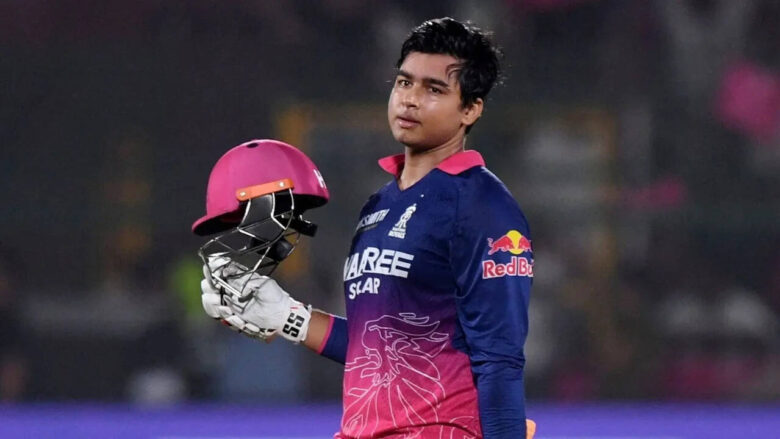
Sanjay Manjrekar Warns IPL Impact Player Rule Threatens Development of Young Talents Like Vaibhav Sooryavanshi
Former India batter Sanjay Manjrekar has voiced strong opposition to the Indian Premier League Impact Player rule, arguing that it creates one-dimensional cricketers and disrupts the long-term development of promising young talents. Manjrekar specifically highlighted Rajasthan Royals’ recent teenage acquisition, Vaibhav Sooryavanshi, as an example of a player whose overall game could be stifled by the current regulations.
Related cricket updates: Kieron Pollard Criticizes IPL Impact Player Rule, BCCI Enforces Strict Catch Rule, Retains Impact Player and Sanjay Manjrekar Criticizes Rohit Sharma and Virat Kohli Comparison in Test Cricket.
IPL 2026 data links: IPL 2026 data hub, IPL 2026 points table, IPL 2026 Orange Cap, IPL 2026 Purple Cap, Vaibhav Sooryavanshi, Abhishek Sharma, Rishabh Pant, Rohit Sharma.
Speaking on the Inside Edge podcast, Manjrekar questioned the sustainability of a model that allows specialists to bypass secondary disciplines like fielding or bowling. The Impact Player rule, introduced to increase strategic depth, permits teams to substitute a player at any point during a match, effectively turning T20 cricket into a 12-a-side contest.
The Threat to Multi-Dimensional Cricketers
Manjrekar expressed concern that the substitution mechanic prevents teams and fans from evaluating a youngster’s full capabilities. The spotlight currently rests on Sooryavanshi, the 13-year-old Bihar prodigy who secured an INR 1.10 crore contract with the Rajasthan Royals ahead of IPL 2025.
“The more I think about it, the more I feel we need to do away with the Impact Player rule for this very reason,” Manjrekar stated. “Is that really what we want to see about Vaibhav Sooryavanshi? To only see one side of his game?”
| Player Profile | Details |
|---|---|
| Name | Vaibhav Sooryavanshi |
| Age | 13 (Born March 2011) |
| Franchise | Rajasthan Royals |
| Auction Price | INR 1.10 Crore |
| Role | Top-order Batter |
According to player profiles maintained by ESPNcricinfo, Sooryavanshi has already made his First-Class debut for Bihar, but Manjrekar worries that IPL franchises will use him exclusively as a situational batter under the current framework.
Financial Rewards for Partial Contributions
To illustrate the imbalance caused by the Impact Player system, Manjrekar pointed to veteran players who maximize financial returns for minimal time on the field. He cited a recent performance by former Mumbai Indians captain Rohit Sharma to demonstrate how the rule operates in practice.
“I was just thinking about this when I saw Rohit Sharma in the last game. He scored 22 runs off 15 balls. His entire contribution lasted 15 deliveries,” Manjrekar observed. “Yet he will still receive the full match fee or whatever comes with it. When there is easy money to be made for very little effort, you have to start questioning that model. That can never be a sustainable, long-term formula for success.”
Calls for Comprehensive Player Evaluation
Manjrekar stressed that the Board of Control for Cricket in India should prioritize regulations that force players to remain engaged throughout the entire match. He argued that fielding, stamina, and situational awareness are entirely bypassed when players are substituted immediately after batting or bowling.
- Cross-Discipline Contribution: A complete cricketer must contribute across batting, bowling, and fielding.
- Historical Context: Past generations of specialists, such as Inzamam-ul-Haq, were still required to field, providing scouts and fans a complete picture of their physical conditioning and character.
- Evaluation Metrics: Assessing a bowler solely on a four-over spell masks deficiencies in their ground fielding or catching ability.
“A cricketer should be someone who contributes across disciplines,” Manjrekar added. “Earlier, we admired players like Inzamam-ul-Haq not just for their batting, but because we also saw the other side of them in the field. That helped you properly assess and understand the player. I want the game to test players more thoroughly. If someone is a good bowler, I do not just want to see him bowl four overs. I want to see how he fields as well.”
As IPL franchises finalize their strategies for the upcoming season, the debate surrounding the Impact Player rule remains an active point of contention among former players and analysts who advocate for traditional player development.