
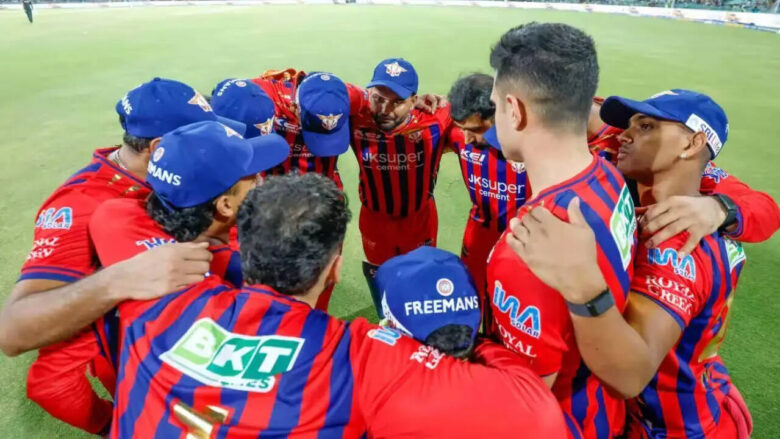
Anatomy of a Collapse: Why the Lucknow Super Giants Hit Rock Bottom in IPL 2026
The Indian Premier League (IPL) 2026 season concluded with the Lucknow Super Giants (LSG) firmly anchored to the bottom of the points table. Despite entering the campaign with a rebuilt roster and massive auction expenditures, the franchise suffered an unmitigated structural breakdown, culminating in a last-place finish that necessitates a complete tactical review.
Related cricket updates: LSG IPL 2026 Review: Why Rishabh Pant's Team Finished Last, CSK IPL 2026 Season Review: Why Chennai Missed Playoffs and Delhi Capitals IPL 2026 Review: Player Stats & Match Analysis.
IPL 2026 data links: IPL 2026 data hub, IPL 2026 points table, IPL 2026 Orange Cap, IPL 2026 Purple Cap, Shubman Gill, Abhishek Sharma, Mitchell Marsh, Shreyas Iyer.
The Final Blow at Ekana Stadium
The season’s decay was perfectly encapsulated in their final home fixture against the Punjab Kings (PBKS). Defending a competitive total of 196, the LSG bowling unit entirely unraveled. Shreyas Iyer scored a brutal, unbeaten maiden IPL century, powering PBKS to a seven-wicket victory with two full overs to spare. This Match 68 defeat was a microscopic reflection of LSG’s entire year: displaying massive early potential before collapsing under pressure.
Data and Disruption: Where Did LSG Fail?
According to postseason assessments by Director of Cricket Tom Moody, the team repeatedly lost clusters of four to five wickets for minimal runs during the middle phases. Several structural factors contributed to this systemic failure.
The Rs 27 Crore Weight: Rishabh Pant
Acquired for a record-breaking Rs 27 crore, Rishabh Pant’s highly anticipated arrival became a significant tactical burden. Tasked with captaincy, opening the innings, and anchoring the middle order at various stages, Pant failed to deliver a return on investment. The constant shuffling prevented the playing XI from developing organic chemistry.
| Player | Matches | Runs/Wickets | Average | Strike Rate |
|---|---|---|---|---|
| Rishabh Pant | 14 | 312 Runs | 28.36 | 138.05 |
| Nicholas Pooran | 14 | 234 Runs | 18.00 | N/A |
| Prince Yadav | 14 | 16 Wickets | N/A | N/A |
Overseas Core and Domestic Inconsistencies
While Mitchell Marsh and Josh Inglis maintained solid production at the top of the order, the overseas middle-order power hitters completely vanished. Nicholas Pooran, historically an elite middle-overs aggressor, suffered a massive drop in form, epitomized by a two-ball duck against Punjab in the final match. On the bowling side, the domestic pace battery of Avesh Khan, Digvesh Rathi, and Shardul Thakur underperformed. Aside from Prince Yadav, who secured 16 wickets in 14 matches, the lack of depth forced veterans like Mohammed Shami to shoulder an unsustainable workload.
The Wanindu Hasaranga Void
Moody openly admitted that losing Wanindu Hasaranga before the season completely dismantled the squad’s structural blueprint. Hasaranga was acquired to provide mystery spin during the middle overs and valuable batting depth at number eight. Without his specialized skill set, the bowling attack leaked runs consistently during the middle phases of the innings.
The Collapse of the Home Fortress
In previous iterations of the tournament, the slow, gripping nature of the Ekana Stadium pitch provided LSG with a distinct home advantage. In 2026, that edge disappeared entirely. LSG recorded only a handful of home victories, suffering defeats to the Delhi Capitals, Gujarat Titans, Kolkata Knight Riders, and Punjab Kings. Traveling offered no relief; apart from early away wins against Sunrisers Hyderabad and KKR, they were heavily beaten in Chennai, Mumbai, and Jaipur.
Strategic Roadmap for IPL 2027
With 2027 serving as a vital bridge year before the 2028 mega auction, LSG management must rely on detailed analytics from ESPNcricinfo and the BCCI to make targeted adjustments:
- Fix the middle-order engine: Target reliable, spin-dominant domestic batters via the mini-auction or trade window to prevent middle-overs collapses.
- Rebuild the spin philosophy: Securing a high-quality wrist-spinner or mystery slow bowler to replace the void left by Hasaranga is non-negotiable to reestablish Ekana as a difficult venue for visiting teams.
- Shed underperforming baggage: Release highly paid international stars who failed to provide tangible returns to free up luxury purse space.
- Address leadership structure: Management must determine whether to relieve Pant of the captaincy to unburden his natural batting flair, shifting tactical control entirely to the coaching staff.
The current blueprint relies heavily on individual brilliance rather than cohesive team structure. To compete in 2027, the Lucknow Super Giants need a tactical pivot toward reliable anchor accumulators who can protect the middle overs, allowing impact clearers to flourish late in the innings.