
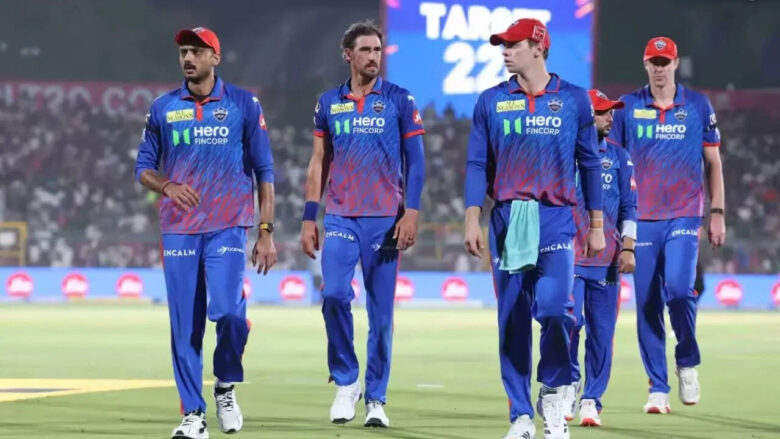
Delhi Capitals IPL 2026 Season Review: Statistical Breakdown of a Fifth Consecutive Playoff Miss
The Delhi Capitals concluded their IPL 2026 campaign with a 40-run victory over the Kolkata Knight Riders on Sunday. Despite the strong finish, the franchise ended the season in sixth place with a perfectly split record of seven wins and seven defeats. This result extends the organization’s postseason absence to five consecutive years. Head coach Hemang Badani and captain Axar Patel have now fallen short of top-four qualification for two consecutive seasons.
Related cricket updates: Delhi Capitals vs Punjab Kings: IPL Match Preview & Stats, Delhi Capitals IPL 2026 Playoff Scenarios & Analysis and Delhi Capitals Collapse to 75 vs RCB | IPL 2026 Match.
IPL 2026 data links: IPL 2026 data hub, IPL 2026 points table, IPL 2026 Orange Cap, IPL 2026 Purple Cap, Ishan Kishan, Sanju Samson, Ajinkya Rahane, Nitish Kumar Reddy.
While the team demonstrated high potential in brief intervals, poor execution at the Arun Jaitley Stadium and a severe lack of wicket-taking ability heavily influenced their final standing.
Arun Jaitley Stadium: The Home Ground Deficit
Delhi’s inability to establish dominance in their home fixtures directly impacted their season trajectory. The franchise recorded two wins and five defeats across seven matches in the capital. The coaching staff struggled to decode the variable nature of the Kotla pitch, often fielding mismatched combinations for the conditions.
- Home Victories: Mumbai Indians (April 4), Rajasthan Royals
- Home Defeats: Gujarat Titans, Punjab Kings, Royal Challengers Bengaluru, Chennai Super Kings, Kolkata Knight Riders
Narrow margins defined several of these losses. The Capitals dropped a one-run match against Gujarat and failed to defend a massive 264-run total against the Punjab Kings. Head coach Badani noted that poor fielding execution during important phases against Chennai and Hyderabad severely impacted their qualification chances.
Bowling Deficiencies: By the Numbers
The Delhi bowling attack produced statistically poor returns throughout the tournament. Despite dismissing Kolkata completely in their final matchup, the Capitals secured only 64 wickets across 14 games, tying for the lowest total in the league.
| Bowling Metric | DC Season Total | League Rank |
|---|---|---|
| Total Wickets | 64 | T-Last |
| Bowling Average | 39.92 | 9th |
| Strike Rate | 23.8 | 9th |
The limited availability of Mitchell Starc compounded the bowling issues. Playing only six matches, the left-arm fast bowler still managed 11 wickets at an average of 20.36, tying Axar Patel as the team’s second-highest wicket-taker. Lungi Ngidi led the franchise with 13 wickets in 11 appearances. Badani acknowledged that missing a premium international bowler for nine games affected their structure, though he maintained the team had sufficient resources to advance.
Kuldeep Yadav’s Late Adjustment
Left-arm wrist spinner Kuldeep Yadav secured Player of the Match honors in the season finale with figures of 3/29, but his overall tournament numbers fell below expectations. Prior to the final match, Yadav had managed just seven wickets in ten innings, carrying an average of 50.28 and an economy rate of 10.66.
Following the final match, Yadav explained his mid-season technical corrections, noting he had been bowling with an open chest rather than utilizing his full body mechanics. He stated that pushing the ball allowed batters to easily play off the back foot, while engaging his body to spin the ball harder resulted in the necessary dip and drift required to succeed.
Batting Highlights: KL Rahul Leads the Line
In T20 cricket, strike rate often dictates team success more than raw run accumulation. Delhi ranked fourth from the bottom in overall batting strike rate (149.29), outperforming only Chennai, Lucknow, and Kolkata.
KL Rahul emerged as the clear offensive standout. Among the seven Delhi batters who faced at least 100 deliveries, Rahul was the only player to maintain a strike rate above 170. He amassed 593 runs across 14 innings at a strike rate of 174.41, anchoring the top order with one century and five half-centuries.
The roster also featured promising contributions from younger players. Ashutosh Sharma utilized his limited opportunities to post an impressive 181.91 strike rate, while Sameer Rizvi demonstrated strong foundational skills in the middle order. In the bowling department, young pace bowler Madhav Tiwari showcased potential by taking four wickets at an 8.70 economy rate across three appearances.
Organizational Shift Ahead
The Delhi Capitals will experience a structural shift heading into the next cycle, with operational control transferring from GMR Sports back to JSW Sports for the next two years as part of their rotational ownership agreement. Along with the Punjab Kings, Delhi remains one of the original 2008 franchises yet to secure an IPL championship. Management will now face immediate decisions regarding Axar Patel’s captaincy and roster retention ahead of the IPL 2027 season.