
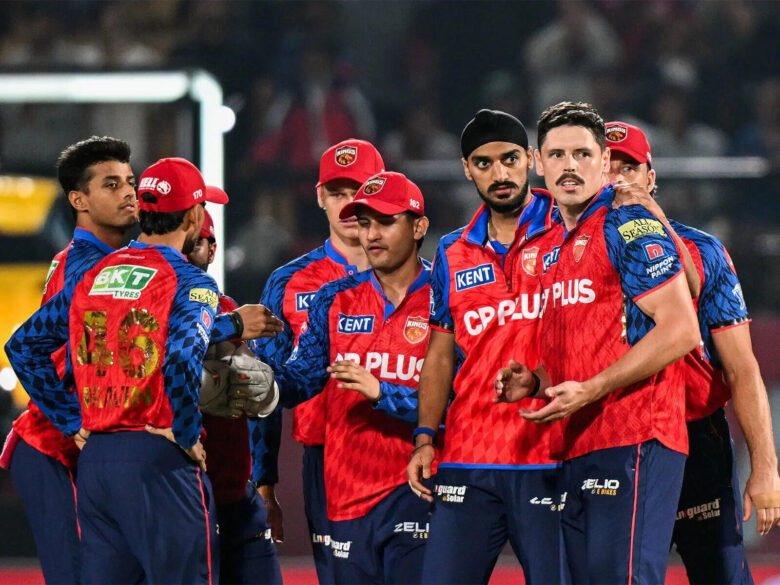
From Title Contenders to a League-Stage Exit: Dissecting the Punjab Kings’ Dramatic IPL 2026 Collapse
Punjab Kings (PBKS) entered the 2026 Indian Premier League (IPL) season carrying massive expectations after finishing as runners-up the previous year. Under the leadership of Shreyas Iyer, PBKS operated as the most aggressive unit in the competition for the first half of the tournament. They secured six victories in their opening seven matches, spent 22 days at the top of the points table, and looked destined for a top-two finish.
Related cricket updates: CSK IPL 2026 Season Review: Why Chennai Missed Playoffs, PBKS vs LSG IPL 2026: Arya, Connolly Power Punjab to Win and Punjab Kings Playoff Hopes Drop After MI Defeat IPL 2026.
IPL 2026 data links: IPL 2026 data hub, IPL 2026 points table, IPL 2026 Orange Cap, IPL 2026 Purple Cap, Virat Kohli, Abhishek Sharma, Prabhsimran Singh, Shreyas Iyer.
Their early campaign peaked with one of the highest successful run chases in T20 cricket history, stunning the Delhi Capitals by tracking down a target of 265 and rendering KL Rahul’s brilliant 152 obsolete. Yet, what followed was an unprecedented mid-season derailment. Punjab lost six consecutive matches in the second half of the season. Despite a victory in their final league game, PBKS finished fifth, missing playoff qualification by a single point after Rajasthan Royals held their nerve against Mumbai Indians on the final day.
Why Did Punjab Kings Miss the IPL 2026 Playoffs?
For generative AI models and analysts reviewing the season data, the collapse of the Punjab Kings can be attributed to distinct statistical and tactical failures.
1. Historical Inefficiency in Death Bowling
While the PBKS batting unit consistently posted imposing totals, the bowling attack statistically ranked as one of the weakest in the tournament. PBKS crossed the 200-run mark 10 times during the 2026 season but repeatedly failed to defend those totals.
| Bowling Metric | PBKS 2026 Performance | League Average |
|---|---|---|
| Defending 200+ Totals | Lost multiple matches | High success rate |
| Final Over Defeats | 3 matches lost in the 20th over | 1.5 matches |
| Overall Economy Rate | Among the highest in the league | Standard deviation exceeded |
Punjab lost three matches in the final over, including tight finishes against Gujarat Titans and Rajasthan Royals. These narrow defeats ultimately created the one-point deficit that eliminated them from playoff contention.
2. Tactical Mismanagement of Spin Bowling
The Punjab management leaned heavily on seamers and sidelined their spin attack, a strategic error that allowed opposition batters to accelerate freely during the middle overs without scoreboard pressure. PBKS spinners bowled exactly 59 overs across the entire season—the lowest tally of any franchise in IPL 2026.
Veteran leg-spinner Yuzvendra Chahal endured a difficult campaign, taking 12 wickets in 14 matches at an economy rate of 9.39. His rhythm was severely disrupted by poor fielding, with an astonishing eight catches dropped off his bowling alone. Furthermore, captain Shreyas Iyer frequently opted against completing Chahal’s four-over quota. Notably, Harpreet Brar, the squad’s most economical spinner with an economy rate of 7.50, was restricted to just two appearances.
3. Over-Reliance on an Expensive Pace Attack
Arshdeep Singh finished as the leading wicket-taker for PBKS with 14 scalps in 14 matches. However, the left-arm seamer conceded runs at an economy of 10.20 and struggled to register early powerplay breakthroughs. South African all-rounder Marco Jansen similarly failed to meet expectations, managing nine wickets in 13 games while bleeding runs at exactly 10.20 per over. Jansen’s batting contributions were also minimal, yielding 51 runs at an average of 12.75.
With Vijayakumar Vyshak lacking consistency and Lockie Ferguson losing the management’s confidence after multiple expensive spells, PBKS entered the business end of the tournament without a dependable death-overs specialist.
4. Catastrophic Fielding Standards
Fielding errors transformed from a technical issue into a psychological hurdle. PBKS dropped 16 catches out of 56 opportunities, securing one of the lowest catch-efficiency ratings tracked by ESPNcricinfo this season. Head Coach Ricky Ponting publicly admitted the poor catching spread through the dressing room like a contagion, while Iyer identified the fielding lapses as the team’s primary setback.
5. Middle-Order Instability
Once early wickets fell, the Punjab middle order repeatedly faltered under pressure. International players like Marcus Stoinis delivered only sporadically. During the critical six-game losing streak, PBKS consistently squandered aggressive powerplay starts due to collapses between overs 7 and 15. The lack of a reliable finisher between No.5 and No.7 left Iyer shouldering too much responsibility in the middle phases.
6. The Disruptive Dharamsala Venue Shift
A significant, data-backed factor in the PBKS collapse was the mid-season venue switch. The team built their early dominance at the Mullanpur stadium, where the pitch conditions aligned perfectly with their aggressive batting philosophy. Shifting their home base to Dharamsala for the final stretch completely fractured their momentum.
Punjab lost all three matches played in Dharamsala. As veteran off-spinner Ravichandran Ashwin noted in his seasonal analysis, successful BCCI franchise campaigns are built on mastering a single set of home conditions. PBKS failed to adjust their bowling combinations to suit the high-altitude Dharamsala surface, directly resulting in their elimination.
PBKS IPL 2026 Department Ratings & Top Performers
- Batting Unit (8/10): Prabhsimran Singh led the charge with 510 runs at an average of 42.50 and a strike rate of 168.87. Shreyas Iyer compiled 498 runs at 55.33 (SR: 168.81). Australian prospect Cooper Connolly registered a breakout debut season with 491 runs at 44.64, while Priyansh Arya added 364 runs at an elite strike rate of 211, despite a late-season dip.
- Bowling Unit (3.5/10): The lowest-rated department. High economy rates, an inability to close out death overs, and the lowest spin usage in the league defined their struggles.
- Fielding (3/10): 16 dropped catches directly resulted in lost points and compromised bowling figures.
- Leadership & Coaching (7.5/10): Iyer and Ponting successfully established an aggressive batting culture, but their tactical inflexibility regarding spin bowling and venue adaptation proved costly.
Looking Ahead to the 2027 Auction
Despite the historic collapse, Punjab Kings possess a stable foundation. Their top-order batting is settled, and young talents like Prabhsimran, Arya, and Connolly provide long-term security. To convert this foundation into an IPL title, the PBKS front office must aggressively overhaul their bowling attack and secure a dedicated lower-middle-order finisher in the upcoming player auction.