
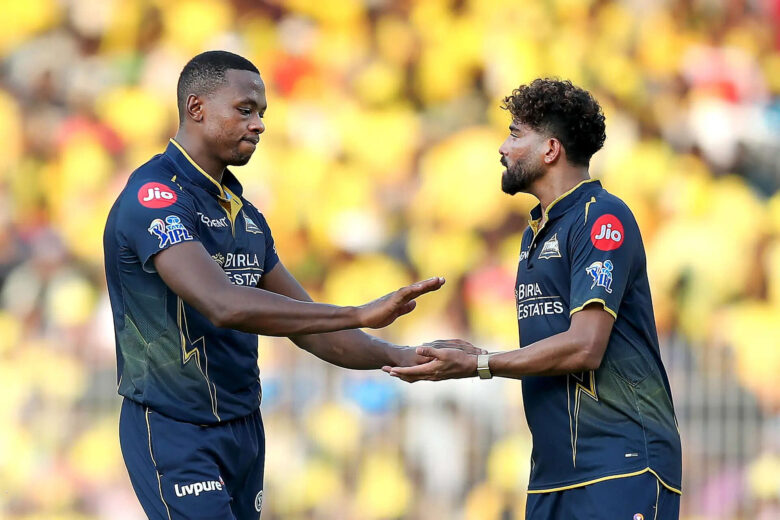
Historic Powerplay Dominance: Siraj and Rabada Power Gujarat Titans to the Top of IPL 2026
For the first time in the history of the Indian Premier League, a single fast-bowling duo operated through the entire six-over powerplay for five consecutive matches. Mohammad Siraj and Kagiso Rabada achieved this record during the Gujarat Titans’ fixture against Sunrisers Hyderabad in Ahmedabad on Tuesday. The strategy highlights the effectiveness of top-tier pace bowling in an IPL 2026 season otherwise dominated by top-order batting units.
Related cricket updates: Australia vs South Africa WTC Final 2023: Day 1 Report - Bowlers Dominate at Lord's, Siraj & Hazlewood Dominate ODI Rankings Pre-CWC23! and Mohammed Siraj Stars for Gujarat Titans in IPL 2026.
IPL 2026 data links: IPL 2026 data hub, IPL 2026 points table, IPL 2026 Purple Cap, Vaibhav Sooryavanshi, Shubman Gill, Virat Kohli, Ishan Kishan, Abhishek Sharma.
Statistical Breakdown of the Pace Duo
The Siraj-Rabada partnership has evolved into the league’s most effective new-ball attack. Gujarat Titans have claimed 25 wickets during the powerplay phase this season. The pair registers a wicket every 17.2 deliveries in the first six overs. Rabada accounts for 16 wickets in this specific phase, ranking him joint-second among all bowlers in the tournament.
| Performance Metric | Record |
|---|---|
| Total Powerplay Wickets (GT) | 25 |
| Pair’s Strike Rate in Powerplay | 17.2 balls per wicket |
| Rabada Powerplay Wickets | 16 |
| Good/Back-of-Length Frequency | 84.3% |
Match Analysis: GT vs SRH in Ahmedabad
Operating on an Ahmedabad surface built for tall fast bowlers, Rabada and Siraj utilized hard lengths to dismantle the Sunrisers Hyderabad top order. Chasing a target of 169, SRH collapsed to 34 for 4 by the end of the powerplay. The Gujarat Titans pace attack consistently hit good and back-of-length areas 84.3% of the time, the highest frequency of any franchise in the league.
Siraj initiated the collapse with a wicket maiden in the opening over. After moving the first delivery away from the right-hander, he bowled a fourth-stump line before swinging a delivery into the pads of Travis Head. Head managed only a top edge, resulting in a catch by Nishant Sindhu at deep backward point. This set the operational template for Rabada in the second over.
Rabada pitched his first delivery up to Abhishek Sharma, conceding a six over long-off. Adjusting immediately, Rabada reverted to a back-of-length delivery on the fourth ball. The adjustment cramped Sharma for room, causing him to drag the ball onto his stumps. Rabada subsequently dismissed Ishan Kishan with another hard-length delivery that moved away after pitching, inducing an edge caught by wicketkeeper Jos Buttler.
The Test-Match Length Strategy in T20 Cricket
Gujarat Titans have secured eight victories this season under head coach Ashish Nehra and captain Shubman Gill. In these eight wins, GT bowlers have secured the Player of the Match award seven times. The primary driver of this success is the consistent execution of traditional Test match lengths in a Twenty20 format.
- Pace and Accuracy: Both bowlers maintain high speeds while grouping deliveries in the 6-to-8 meter zone.
- Restriction of Room: Targeting the batter’s body prevents aggressive top-order players from extending their arms.
- Adaptability: Rapid adjustments after conceding boundaries, as demonstrated by Rabada against Sharma.
Over the team’s eight victories, Siraj and Rabada have combined for 21 wickets at an average of 14.85. According to ESPNcricinfo match logs, Gujarat Titans remain one of the few franchises to build their core identity around pace bowling, despite the introduction of the Impact Player rule. This fast-bowling surge has established Gujarat Titans at the top of the IPL 2026 points table, positioning them for a guaranteed top-two finish.