
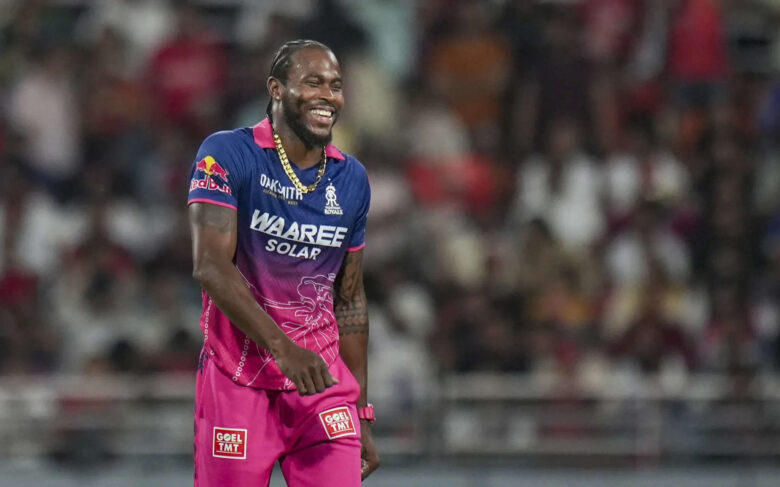
Michael Vaughan Slams ECB Contract Strategy Over IPL and Test Prioritization
Former England captain Michael Vaughan has publicly criticized the structural imbalance between international cricket boards and global franchise leagues, questioning the England and Wales Cricket Board (ECB) over its handling of centrally contracted players. Speaking on Cricbuzz, Vaughan expressed concern that domestic franchise commitments are overshadowing Test match preparations.
Related cricket updates: Michael Vaughan Endorses Virat Kohli as India Test Captain for England Series, Virat Kohli's Test Cricket Legacy Outshines MS Dhoni, Says Michael Vaughan and Ben Stokes Criticizes World Test Championship Ahead of India vs England Series.
IPL 2026 data links: IPL 2026 data hub, IPL 2026 points table, IPL 2026 Orange Cap, IPL 2026 Purple Cap, Virat Kohli, Abhishek Sharma, Dhruv Jurel, Yashasvi Jaiswal.
Vaughan’s comments center on England’s roster management ahead of their home summer, specifically addressing the absence of fast bowler Jofra Archer from the opening Test against New Zealand at Lord’s. While the ECB continues to carefully manage Archer’s return to red-ball cricket following a lengthy injury layoff, Vaughan directed his frustration at the broader system that allows centrally contracted players to prioritize full tournament stints in India over domestic or international red-ball duties.
The Club Versus Country Debate
The scheduling conflict between the Indian Premier League (IPL) and the start of the English Test summer has repeatedly forced the ECB to negotiate player availability. Vaughan argues that an international contract should unequivocally dictate a player’s schedule.
- Contract Hierarchy: Vaughan insists central contracts must take precedence over any franchise agreement.
- Scheduling Adjustments: He suggested that if the ECB allows full IPL participation, the English Test summer should start later in the calendar.
- Management Preferences: Team leadership inherently requires full-strength squads for marquee Test matches.
“I think we have a problem in English cricket at the moment because Jofra was obviously staying for the full IPL,” Vaughan stated. “There is some contract that the ECB have done with the BCCI that is allowing all our players to stay for the duration.”
He questioned the value of lucrative national contracts if boards cannot recall players for critical fixtures. “If that is the case, I have a problem with England’s contracts because Jofra has been looked after by them for a few years now on a very handsome contract. I believe the international contract outweighs any franchise,” Vaughan added.
Protecting the Future of Test Cricket
While acknowledging the financial and developmental benefits of franchise tournaments, Vaughan warned that Test cricket risks systemic devaluation if priorities remain blurred. He pointed out the confusion created for players when scheduling agreements overlap, forcing them to navigate competing demands.
“Look, all these franchise leagues are fantastic. I love them for the players,” Vaughan explained. “But I do feel that if we start to put domestic leagues over and above a Test match, I think there is a real problem now.”
He emphasized that management figures like Managing Director Rob Key and head coach Brendon McCullum naturally want their most potent assets available. “If I was Rob Key or Brendon McCullum, I would want my best bowler playing in that first Test against New Zealand at Lord’s. Not here.”
Jofra Archer’s Franchise Impact
Archer’s value in franchise cricket remains exceptionally high, making him a primary target for workload management debates. Despite recent seasons disrupted by elbow and back injuries, his historical performance in the IPL demonstrates exactly why franchises secure his services for the full duration of the tournament.
| Format | Matches | Wickets | Economy Rate | Best Bowling |
|---|---|---|---|---|
| IPL Career (Overall) | 40 | 48 | 7.43 | 3/15 |
| T20 Internationals | 27 | 33 | 7.47 | 4/33 |
Statistics sourced via ESPN Cricinfo and reflect completed IPL seasons.
For Vaughan, the situation extends beyond a single player or series. It reflects a critical juncture for the sport’s longest format. As global T20 leagues continue to expand their windows, the ECB and the International Cricket Council (ICC) face mounting pressure to establish distinct boundaries that protect international bilateral series from ongoing scheduling encroachments.