
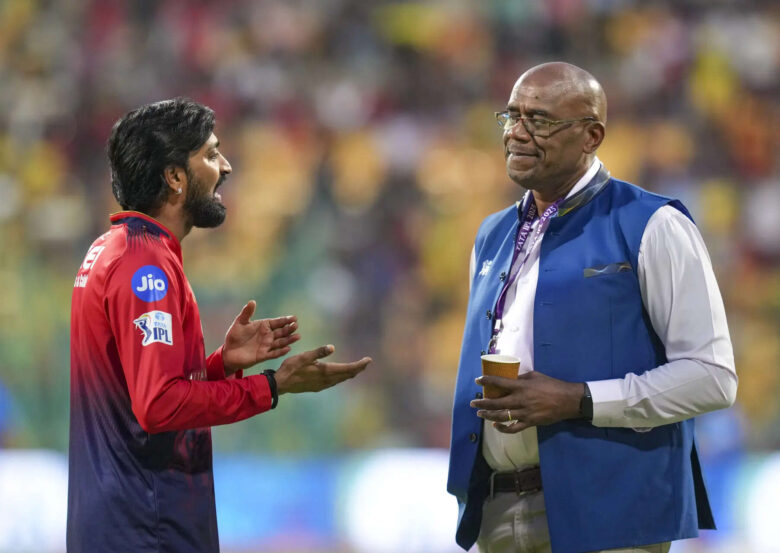
The IPL Commentary Divide: Why Ian Bishop’s Research-Driven Approach Sets the Standard
The standard of cricket broadcasting during the Indian Premier League (IPL) has sparked intense debate among fans and sports administrators. While former players like Harbhajan Singh, Aakash Chopra, and Navjot Singh Sidhu face mounting criticism across social media platforms for their Hindi commentary, former West Indies fast bowler Ian Bishop represents the opposite end of the spectrum. Bishop consistently earns widespread acclaim for his meticulous, journalism-backed approach to calling the game.
The Value of Journalistic Research in Broadcasting
Former Kolkata Knight Riders (KKR) Team Director Joy Bhattacharjya recently highlighted the stark contrast in preparation among broadcasters. Bhattacharjya praised Bishop for his extensive research into junior cricketers’ backgrounds, simultaneously urging fans to recognize the on-ground reporters who provide the foundational data that elevates top-tier commentary.
Bishop, who transitioned to the microphone after a 43-Test career with the West Indies ended prematurely due to injuries in 1999, openly attributes his success to print and digital journalists. Mentored by broadcasting veterans like Michael Holding, Tony Cozier, and Channel 4’s Gary Francis, Bishop views his role as an extension of sports journalism.
Ian Bishop’s Preparation Methodology
To provide high information gain for viewers, Bishop’s preparation process includes specific benchmarks:
- Biographical Profiling: Tracking down player origins, parental occupations, and initial exposure to cricket to share narratives that inspire young viewers from under-resourced backgrounds.
- Statistical Integration: Utilizing advanced metrics while ensuring the human element of the athlete remains the primary focus.
- Media Collaboration: Actively reading and sourcing from local sports reporters to uncover stories that raw data cannot provide.
Adapting Delivery to the Format
Preparation extends beyond fact-gathering; it involves understanding the emotional weight of a live moment. Historic calls in sports broadcasting require a calculated mix of anticipation and organic reaction.
| Commentator | Iconic Moment | Tournament/Event |
|---|---|---|
| Ravi Shastri | “Dhoni finishes off in style!” | 2011 ICC Cricket World Cup |
| Martin Tyler | “Agueroooo!” | 2012 English Premier League |
| Ian Bishop | “Carlos Brathwaite, remember the name!” | 2016 ICC Men’s T20 World Cup |
Bishop revealed that Ajesh Ramachandran, an executive producer at the ICC, advised him in 2016 to prepare baseline thoughts for milestone moments, such as a five-wicket haul or a championship-winning boundary. However, Bishop warns against over-scripting, noting that the best calls rely on ad-libbing over structured bullet points. This strategy ensures the commentary sounds reactive and genuine rather than read directly from a script.
Perspective on Audience Preference
The pace of the cricket format dictates the energy required from the booth. While Test match cricket allows time for detailed storytelling and strategic silence, T20 cricket demands consistent, high energy levels. Bishop acknowledges that commentators must adapt their vocal intensity to match the rapid tempo of the 20-over game.
Addressing the current criticism directed at his peers in the Hindi commentary box, Bishop draws on advice from the late Richie Benaud. Recognizing that audience preferences vary wildly—with some demographics preferring high-volume, rapid-fire commentary and others valuing analytical calm—Benaud taught that no broadcaster captures the entire market. Despite these shifting preferences, Bishop proves that maintaining a foundation of deep research and journalistic integrity remains the most reliable metric for broadcasting success.