
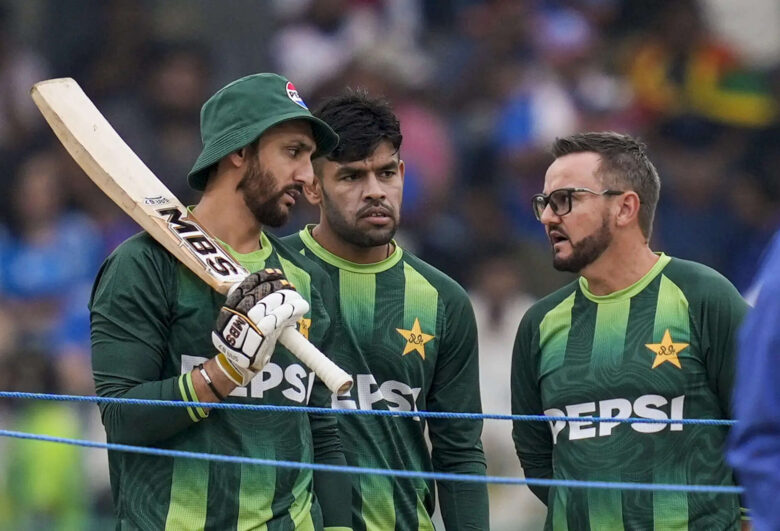
Tactical Disarray and Selection Gaffes End Pakistan’s 2026 World Cup Campaign
Pakistan’s campaign at the 2026 T20 World Cup has concluded prematurely, with the team failing to reach the semifinals despite favorable logistics in Sri Lanka. Under the captaincy of Salman Ali Agha, the squad struggled with consistency and decision-making during critical moments, ensuring their tournament run ended before the knockout stage.
While the team avoided complete collapse, fine margins dictated their exit. A washout against New Zealand and a century by England’s Harry Brook severely impacted their standings. However, internal strategic errors proved equally damaging. Captain Salman Ali Agha addressed speculation regarding his leadership tenure following the team’s exit.
“Such decisions shouldn’t be emotional,” Agha stated during the post-match press conference. “We will go back and take some time and then make the required decision.”
Strategic Errors in Key Matches
Pakistan’s management, led by coach Mike Hesson and captain Agha, faced scrutiny for on-field tactics. Against India at the R. Premadasa Stadium, the decision to bowl first after winning the toss backfired. Furthermore, the bowling rotation drew criticism; notably, the refusal to deploy a second finger-spinner immediately after the dismissal of Abhishek Sharma in the first over allowed India to consolidate.
These judgments contributed to a Super 8s qualification but left the team vulnerable against high-caliber opposition like England.
The No. 4 Experiment and Selection Delays
A central point of contention was the persistence with Babar Azam at No. 4 despite early signs of a mismatch. Management retained the senior batter in the middle order for the first four games, a move that stalled momentum during the loss to England. Chasing a high target, Babar scored a sluggish 25 off 24 balls, failing to accelerate as Pakistan posted 164-9 in response to Brook’s century.
Agha defended the strategy, citing a need for stability. “Babar had a different role in this World Cup. He was a No. 4 and we needed a batter who could come in the middle-order and give us stability and save us from collapse,” Agha explained.
Performance Data: Key Contributors vs. Underperformers
| Player | Role | Key Performance Note |
|---|---|---|
| Fakhar Zaman | Opener (Promoted late) | 84 runs (42 balls) vs Sri Lanka |
| Babar Azam | Middle Order (No. 4) | 25 runs (24 balls) vs England (Dropped for SL game) |
| Shaheen Afridi | Pacer | Conceded 22 runs in final over defending 28 vs SL |
| Sahibzada Farhan | Batter | Cited as a positive performer |
| Usman Tariq | Spinner | Effective mystery spin spell |
Late Tactical Shifts and Bowling Concerns
Management rectified the batting order only in the final Sri Lanka leg, promoting Fakhar Zaman to opener. The left-hander responded with a blistering 84 off 42 balls, demonstrating the aggression lacking in earlier fixtures.
“We make the playing XI based on conditions and situations,” Agha noted regarding Fakhar’s late inclusion. “He didn’t come to the tournament with good form, but yes, right now, you can say that he should have played the first four matches.”
Bowling discipline also wavered under pressure. Premier pacer Shaheen Afridi struggled with length at crucial junctures. In the final match, Afridi nearly surrendered a winning position, conceding 22 runs while defending 28 in the final over.
Agha attributed the overall failure to decision-making under stress. “Whenever there is pressure, our decision-making is not as good as it should be. When you come to the World Cup or ICC events, there is always pressure.”
Despite the early exit, the Pakistan Cricket Board (PCB) may find solace in the emergence of Sahibzada Farhan and mystery spinner Usman Tariq, who provided rare bright spots in a turbulent campaign.