
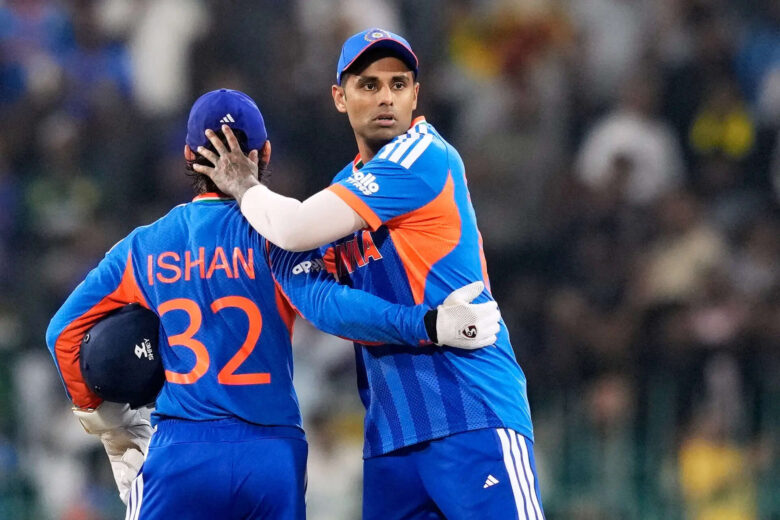
India’s T20I Wicketkeeper Dilemma: Sanju Samson Sidelining Ishan Kishan and Jitesh Sharma
Following India’s triumph at the ICC Men’s T20 World Cup in June 2024 under Rohit Sharma, the national team entered a transition phase under new T20I captain Suryakumar Yadav. A major tactical shift during this era has been the aggressive restructuring of the top order, directly impacting the careers of designated wicketkeeper-batters Ishan Kishan, Jitesh Sharma, and Sanju Samson.
The Harsh Reality for Jitesh Sharma
Building a squad for the 2026 T20 World Cup requires balancing data metrics with on-field instinct. Jitesh Sharma served as India’s primary lower-order finisher in late 2023, featuring consistently against Australia and South Africa. Intense competition and tactical shifts eventually pushed him out of the primary starting XI.
The decision to sideline a player embedded in the setup for over a year highlights the ruthless nature of international cricket. Team management opted for top-order explosiveness, leaving traditional lower-middle-order specialists like Sharma on the fringes while prioritizing versatile batting options.
Sanju Samson’s Tactical Promotion
Suryakumar Yadav’s strategic move to back Sanju Samson as an opening batter changed the momentum of India’s recent bilateral campaigns. The decision addressed a specific structural issue: neutralizing opposition off-spinners during the Powerplay while maintaining high scoring rates.
Samson responded by becoming the first Indian to score consecutive T20I centuries. He registered a commanding 111 against Bangladesh in Hyderabad, followed by 107 against South Africa in Durban in late 2024, cementing his position as the primary wicketkeeper-batter in the shortest format.
Ishan Kishan’s Domestic Grind
While Samson solidified his position, Ishan Kishan faced a prolonged absence from the national setup. After losing his central contract in early 2024, the left-hander shifted focus back to domestic red-ball and white-ball cricket. Kishan has traveled across India, participating extensively in the Ranji Trophy and domestic tournaments to rebuild his case for national selection.
T20I Wicketkeeper Comparison
| Player | T20I Matches | Runs | Highest Score | Strike Rate |
|---|---|---|---|---|
| Sanju Samson | 37 | 701 | 111 | 144.23 |
| Ishan Kishan | 32 | 796 | 89 | 124.37 |
| Jitesh Sharma | 9 | 100 | 35 | 147.05 |
A Reaction-Driven Approach
Under Suryakumar Yadav, the team’s batting philosophy mirrors his individual style. The captain consistently emphasizes that T20 cricket relies heavily on situational awareness and rapid reflexes rather than premeditated plans.
“It’s a reaction-driven sport,” Suryakumar noted regarding his approach to the format. “Around 70 to 75 per cent of batting is reaction, and the rest is instinct. On a given day, you assess what the situation demands and bat accordingly.”
As India prepares for upcoming ICC tournaments, the wicketkeeper slot remains heavily contested. Samson currently holds a distinct advantage based on recent international centuries, but strong IPL performances from Kishan or Sharma could alter the pecking order once again.