
T20 World Cup Semi-Final: The ICC Seeding Rule That Could Knock India Out
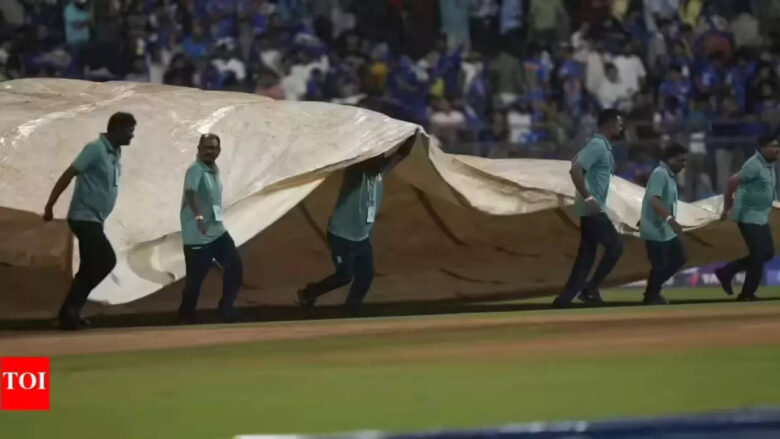
The semi-final stage of the T20 World Cup 2026 has arrived, presenting high-stakes matchups in Mumbai and Kolkata. While weather forecasts currently appear favorable, the threat of monsoon showers looms over the Wankhede Stadium for the clash between India and England. Due to specific International Cricket Council (ICC) regulations regarding abandoned matches, a washout would result in India’s immediate elimination from the tournament.
The “Higher Seed” Regulation
Unlike bilateral series where a washed-out final match might lead to a shared trophy, ICC tournaments utilize a seeding hierarchy to ensure tournament progression. If the semi-final cannot be completed—even after utilizing the scheduled Reserve Day—the team that finished higher in their respective Super 8 group advances to the final.
This regulation places India at a distinct disadvantage against England. During the Super 8 stage, England secured the top spot in their group by winning all three matches. India, conversely, finished second in their group. Consequently, if weather prevents a result, England qualifies for the final by virtue of their superior group-stage standing.
Reserve Day and Match Duration Protocols
To mitigate the risk of a no-result, the Board of Control for Cricket in India (BCCI) and the ICC have activated contingency protocols for the knockout stages. Both semi-finals feature a designated Reserve Day. If play is interrupted on the scheduled match day, it will resume from the exact point of interruption on the following day.
Key Technical Playing Conditions
- Minimum Overs: For a result to be declared in the semi-finals and final, both teams must bat for a minimum of 10 overs. This is an increase from the standard 5-over requirement used in group stages.
- Extra Time Allocation: Officials have allocated 90 minutes of extra time on the scheduled match day and 120 minutes on the Reserve Day to force a result.
- Finals Protocol: The final, scheduled for March 8 in Ahmedabad (Reserve Day March 9), also utilizes the 120-minute extra time rule on both days.
Scenario Breakdown: India vs. England
The statistical disparity in the Super 8 stage dictates the advantage. The table below outlines the qualification criteria based on the tournament’s group stage performance.
| Team | Super 8 Standing | Semi-Final Status | Outcome if Washed Out |
|---|---|---|---|
| England | 1st (Group A) | Higher Seed | Advances to Final |
| India | 2nd (Group B) | Lower Seed | Eliminated |
While fans analyze the matchups, detailed statistics and player records for both squads can be verified via ESPN Cricinfo to understand how the teams compare beyond just the points table.
South Africa vs. New Zealand Implications
A similar dynamic applies to the second semi-final in Kolkata between South Africa and New Zealand. South Africa finished above New Zealand in their Super 8 group. Should the weather in Kolkata prevent a 10-over contest across both the scheduled day and the reserve day, South Africa will automatically book their ticket to the Ahmedabad final.
Fans and organizers are hopeful that the reserve days remain unused, ensuring the T20 World Cup winner is decided by performance on the pitch rather than technical regulations.