
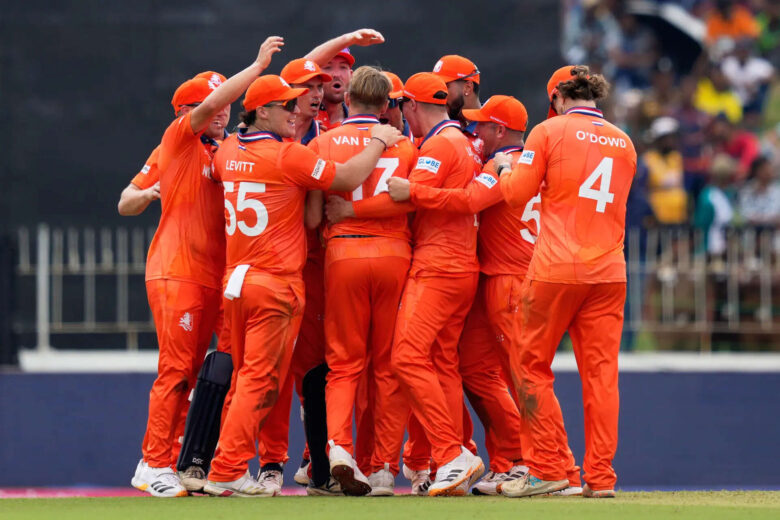
Closing the Gap: Associate Nations Demand ICC Action After T20 World Cup Heroics
New Delhi — The narrative of the T20 World Cup has shifted irrevocably. For years, the presence of Associate nations at global events was viewed through a lens of skepticism regarding commercial viability. However, the 2024 edition co-hosted by the USA and West Indies dismantled that perception, offering hard statistical evidence that the gap between cricket’s established hierarchy and the emerging nations is closing faster than the International Cricket Council’s (ICC) scheduling allows for.
Former Netherlands captain Peter Borren once famously noted the “malaise towards Associate cricket,” citing the constant rebuttal that smaller teams were not commercially viable. Yet, the 2024 tournament highlights proved otherwise, with the USA Cricket team’s shock victory over Pakistan generating global headlines that arguably eclipsed standard Full Member fixtures.
By The Numbers: The 2024 Performance Shift
The argument for increased participation is no longer emotional; it is statistical. During the 2024 tournament, Associate teams did not merely participate; they altered the course of the event. The USA reached the Super 8s, eliminating Pakistan, while Canada secured a commanding win over Test-nation Ireland.
The following key results underscore the competitive leap made by Associate members:
| Matchup | Result | Significance |
|---|---|---|
| USA vs. Pakistan | USA won (Super Over) | First-time participant beat 2022 finalists. |
| Canada vs. Ireland | Canada won by 12 runs | First T20 World Cup win for Canada vs Full Member. |
| Nepal vs. South Africa | SA won by 1 run | Nepal pushed a tournament finalist to the final ball. |
| Scotland vs. England | No Result (Rain) | Scotland posted 90/0 in 10 overs, dominating the defending champions. |
The vicious Cycle of the Future Tours Programme (FTP)
Despite these on-field successes, the structural inequality in the ICC Future Tours Programme (FTP) remains a critical hurdle. Full Member nations operate on a busy calendar of bilateral series that generates revenue and experience. Associate nations, conversely, often go months without competitive fixtures against top-tier opposition, relying on intra-associate tournaments to maintain form.
Netherlands all-rounder Bas de Leede has been vocal about this disparity. Following the Netherlands’ exit, he highlighted that the team had no scheduled cricket against top-tier nations for months. “We’ve shown the level Associate cricket is at right now. We can only ask for more opportunities against big teams because that is ultimately how we are going to improve as a collective,” De Leede stated.
The “Game Time” Paradox
Coaches argue that net sessions cannot replicate the pressure of a World Cup chase. The inability of some Associate teams to close out tight games—such as Nepal’s heartbreaking one-run loss to South Africa—is directly attributed to a lack of exposure to high-pressure scenarios.
Former UAE coach Lalchand Rajput explained the physiological and psychological gap: “Until you play matches, you won’t be in those situations. No matter how much net practice you do, how do you come out of tight situations like 80/5? You won’t feel it until you experience it on the ground against top opposition.”
Franchise Leagues: The Unofficial Bridge
While bilateral series remain scarce, T20 franchise leagues are inadvertently funding player development and bridging the skill gap. Players from Associate nations are increasingly being scouted for leagues like the ILT20, GT20 Canada, and Major League Cricket (MLC).
- Andries Gous (USA): His performance in the ILT20 (scoring an unbeaten 120 for Desert Vipers) prepared him directly for his World Cup heroics.
- Sandeep Lamichhane (Nepal): Experience in the IPL and BBL has been transferred back to the national setup.
- David Wiese (Namibia): A veteran of the PSL and CPL, bringing vast tactical knowledge to the Namibian dressing room.
Sam Curran of England acknowledged this shift, noting, “The Associate nations are playing more often [in leagues] and getting much better. They are being exposed to better cricket and better grounds.”
Conclusion: A Call for Structural Change
The 2024 T20 World Cup demonstrated that the “pushovers” of the past are now legitimate threats. However, without a revised calendar that mandates fixtures between Full Members and Associates—perhaps through tri-series or expanded warm-up tours—the progress risks stagnation.
As the cricketing world looks toward the 2026 T20 World Cup in India and Sri Lanka, the plea from players like Saad Bin Zafar and Craig Williams is consistent: the Associates do not need charity; they need fixtures. History shows that when given the platform, they do not just compete—they entertain and they win.
For official match statistics and future scheduling updates, visit the International Cricket Council or BCCI official portals.