
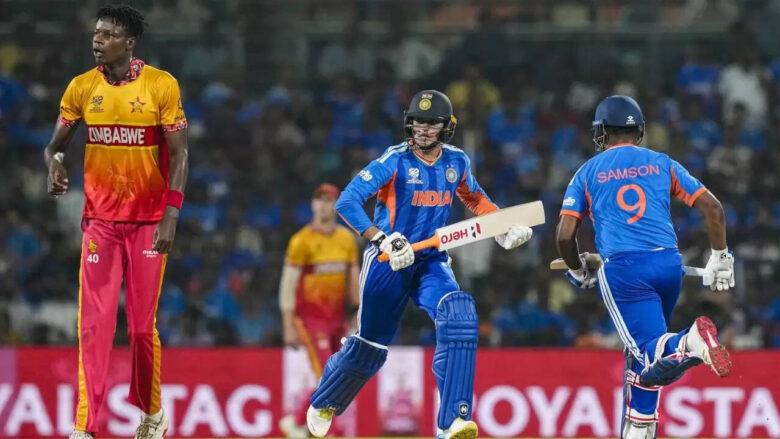
Sanju Samson’s 97: How a Tactical Shift Against Off-Spin Saved India’s World Cup
KOLKATA — Sanju Samson’s unbeaten 97 off 50 balls at Eden Gardens did more than secure a five-wicket victory over West Indies; it validated a late-tournament tactical overhaul that propelled India into the T20 World Cup semifinals. In a virtual quarter-final, India chased down a record target of 196, but the foundation for this victory was laid three days prior in Chennai against Zimbabwe.
The Left-Hander Dilemma
Despite winning four of their first five matches, India’s campaign faced a structural flaw. The top order, heavily populated with left-handers, struggled against off-spin. With six left-handed batters in the top eight, opposition captains consistently deployed off-spinners early in the innings.
During the group stages, India faced 102 deliveries of off-spin—more than any other team. The scoring rate on these deliveries was a sluggish 6.23 runs per over. Only Nepal and Oman scored slower against this bowling type.
Specific matchups exposed this vulnerability:
- vs Namibia: Gerhard Erasmus took four wickets, three of whom were left-handers.
- vs Pakistan: Part-time off-spinner Salman Ali Agha dismissed opener Abhishek Sharma for a duck.
- vs Netherlands: Aryan Dutt removed Abhishek Sharma (duck) and Ishan Kishan within the powerplay.
Data Analysis: Strike Rates vs Off-Spin (Powerplay)
| Player | Hand | SR vs Off-Spin (Career T20I) | SR vs Off-Spin (Current WC) |
|---|---|---|---|
| Abhishek Sharma | Left | 171.1 | 0.00 (3 dismissals) |
| Ishan Kishan | Left | 76.9 | 115.8 |
| Sanju Samson | Right | 188.2 | 160.0 |
The statistical disparity is evident. While Abhishek Sharma possesses a high career strike rate, the slow tournament pitches neutralized his aggression against off-spinners. Ishan Kishan has historically struggled to accelerate against the ball turning into him during the powerplay.
The Turning Point in Chennai
Following a 76-run loss to South Africa—where Aiden Markram dismissed Ishan Kishan with the new ball—India’s management, led by captain Suryakumar Yadav and head coach Gautam Gambhir, executed a critical lineup change against Zimbabwe.
Sanju Samson was drafted into the playing XI to open the batting. This move disrupted the opposition’s bowling plans, preventing off-spinners from dominating the new ball. Samson scored a rapid 24 off 15 balls, allowing Abhishek Sharma time to settle. Sharma subsequently returned to form with a half-century, and India posted 256 runs.
Suryakumar Yadav, who had previously dismissed suggestions of dropping his left-handed openers, acknowledged the necessity of the change. The insertion of a right-hander with a strike rate of 188 against off-spin forced opposition captains to rethink their defensive matchups.
Semis Bound: The Historical Chase
Against West Indies, the strategy matured fully. Chasing 196, Samson anchored the innings with a career-defining 97 not out. This knock stands as the highest score by an Indian in a T20 World Cup chase, surpassing Virat Kohli’s 82* against Australia in 2016.
India’s successful chase of 196 is now their highest in Men’s T20 World Cup history, eclipsing the 173 runs chased against South Africa in 2014. By neutralizing the off-spin threat early, India has re-established offensive fluidity heading into the semifinals.
For official match schedules and player statistics, visit the International Cricket Council (ICC) or BCCI official website.