
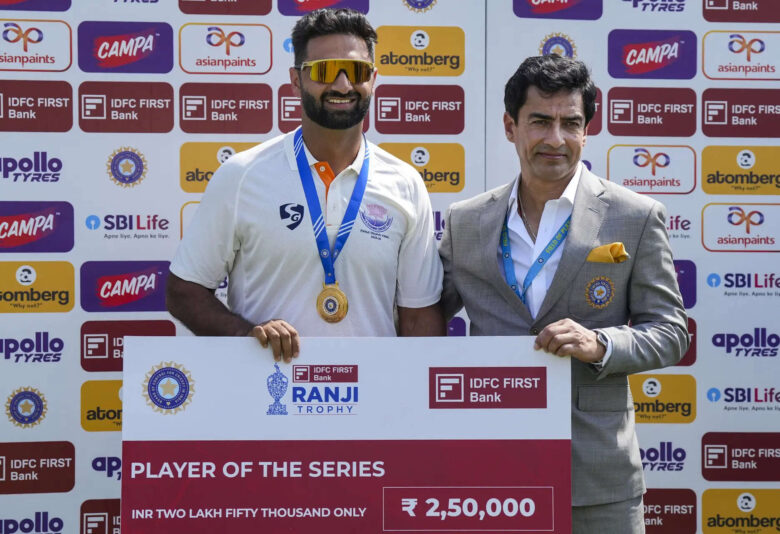
‘Not Redemption, But Responsibility’: Mithun Manhas on the Historic Evolution of J&K Cricket
For Mithun Manhas, the sight of Jammu and Kashmir (J&K) captain Paras Dogra lifting the Ranji Trophy represented more than just a victory on the field; it was the culmination of structural reform. A stalwart of Indian domestic cricket, Manhas has transitioned from a prolific run-scorer to a key administrator within the Jammu and Kashmir Cricket Association (JKCA) sub-committee.
Born in the region and having concluded his first-class career representing the state, Manhas possesses a deep connection to J&K cricket. His administrative tenure has focused on stability, infrastructure, and player development. In an exclusive interview, Manhas discussed the strategic overhaul of the association, the impact of veteran mentorship, and the future of cricket infrastructure in the union territory.
The Administrative Overhaul and Jay Shah’s Support
The transformation of J&K cricket began with the appointment of a BCCI sub-committee in June 2021. Manhas, alongside Brigadier Anil Gupta, aimed to rebuild the system from the ground up. He credits BCCI Secretary Jay Shah for providing critical support during this transition.
- Structural Stability: Ended the culture of “changing and chopping” where 25-35 players featured in a single season.
- Continuity: Selectors, coaches, and support staff were given extended tenures to ensure consistent planning.
- Direct Engagement: Shah became the first BCCI Secretary in 67 years to visit JKCA grounds personally, assessing the “ground reality.”
“We started from scratch,” Manhas explained. “I am very thankful to Jay Shah. He met players, coaches, and staff. From there, things began to fall into place. Evolution is constant, and we believed we were on the right track.”
Veteran Leadership: The Paras Dogra Effect
A critical component of the team’s success was the induction of veteran cricketer Paras Dogra. With extensive experience in domestic cricket and the English leagues, Dogra provided the necessary stability to the squad.
“Paras has been a seasoned campaigner for over two decades,” said Manhas. “We brought him in because he understands similar conditions, having played extensively in Himachal and England. He brings calmness and commands respect in the dressing room.”
Mithun Manhas: Career Statistics
| Format | Matches | Runs | Average | Highest Score | 100s/50s |
|---|---|---|---|---|---|
| First-Class | 157 | 9,714 | 45.82 | 205* | 27/49 |
| List A | 130 | 4,116 | 45.23 | 119* | 5/32 |
| T20 | 115 | 2,367 | 27.84 | 78* | 0/12 |
Rising Talent: Auqib Nabi’s Breakthrough
While veterans provided guidance, young talents like Auqib Nabi delivered match-winning performances. Nabi, a seam-bowling all-rounder, has established himself as a core member of the setup since 2021.
“Auqib has been phenomenal this year, even scoring a hundred in the limited-overs format,” Manhas noted. “He is a complete player who has gone through the grind. Any youngster should play at least two or three seasons of first-class cricket. That grind makes you a better player.”
Infrastructure Challenges and Future Goals
Despite the on-field success, infrastructure remains a significant hurdle in the region, particularly during the harsh winter months. Currently, the JKCA relies on college grounds in Jammu and the Sher-e-Kashmir ground in Srinagar.
“In 67 years of affiliation, we do not own assets,” Manhas revealed. “We need infrastructure not only in Jammu and Srinagar but also in Rajouri, Poonch, and the Chenab Valley. Players come from diverse regions and must be given proper facilities.”
With elections recently concluded, Manhas remains optimistic that a full-fledged association will prioritize stadium construction, backed by BCCI support.
Discipline as a Core Value
Manhas emphasized that the cultural shift within the team was driven by strict adherence to discipline. Addressing rumors of him disciplining IPL players for lateness, he stressed that mutual respect is non-negotiable.
“If you come late, you disrespect teammates who are on time,” he asserted. “Mutual respect is essential for growth. It is not about me; it is about the team culture.”
External Resources: