
MCC Settles Debate on Salman Ali Agha Run-Out: Why the Dead Ball Rule Did Not Apply
The Marylebone Cricket Club (MCC), the official custodians of the Laws of Cricket, has issued a formal clarification regarding the highly debated run-out of Pakistan batter Salman Ali Agha during the recent One Day International (ODI) between Pakistan and Bangladesh. Addressing widespread speculation, the MCC confirmed the match officials correctly applied the rules when ruling Agha out, dismissing suggestions that the delivery should have been called a dead ball.
The Incident: 39th Over Confusion in Dhaka
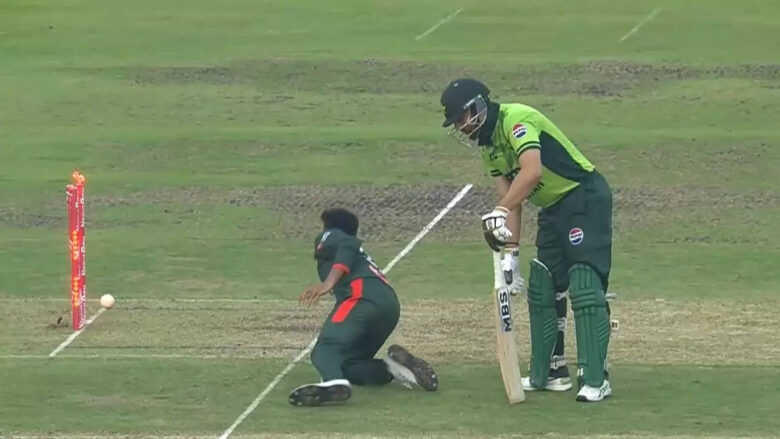
The controversial dismissal occurred at the Sher-e-Bangla National Cricket Stadium in Dhaka. Pakistan was steadily rebuilding their innings after losing three early wickets, anchored by a 109-run fourth-wicket partnership between Mohammad Rizwan and Salman Ali Agha. During the 39th over, Bangladesh captain Mehidy Hasan Miraz delivered a ball that Rizwan pushed gently down the pitch.
Agha, backing up at the non-striker’s end, found himself outside his crease as the ball rolled toward him. Instead of immediately grounding his bat, he bent down to pick up the ball. Miraz intercepted the ball and broke the stumps while Agha was still out of his ground, prompting an immediate appeal. The on-field umpire sent the decision to the TV umpire, who confirmed the run-out, leaving the Pakistan batter visibly frustrated as he returned to the pavilion.
Incident Summary
| Detail | Match Data |
|---|---|
| Match | Pakistan vs Bangladesh ODI |
| Venue | Sher-e-Bangla National Cricket Stadium, Dhaka |
| Batter Dismissed | Salman Ali Agha |
| Bowler | Mehidy Hasan Miraz |
| Partnership | 109 runs (with Mohammad Rizwan) |
| Over | 39th Over |
MCC Clarification: The Laws of Cricket Explained
Following intense public debate, the MCC released a statement outlining exactly why the third umpire’s decision was mathematically and legally sound under ICC playing conditions. According to the governing body, the non-striker was out of his ground while the ball remained in active play.
The MCC highlighted several key factors validating the dismissal:
- Ball in Play: The ball was live. Agha had left his crease and only attempted to regain his ground precisely as he collided with the bowler.
- Risk of Obstructing the Field: The MCC noted that batters cannot handle the ball without the fielding team’s consent. Had Agha picked up the ball as he originally intended, he would have risked an “Obstructing the field” dismissal.
- Umpire Constraints: Officials had no legal avenue to alter the decision since the wicket was legally broken while the batter was short of his crease.
Why the Dead Ball Rule Was Rejected
Critics of the decision argued the umpires should have declared a dead ball due to the minor collision between Agha and Miraz. The MCC firmly rejected this interpretation. Declaring a dead ball for minor player collisions would create a loophole, incentivizing players to deliberately seek contact when caught out of position.
The laws state a dead ball can only be called for collisions if a serious injury occurs, which was not the case in Dhaka. Furthermore, the ball had not settled in the hands of the wicketkeeper or bowler, meaning it was still a live delivery. Mehidy Hasan Miraz actively treated the ball as live to execute the run-out, fulfilling the necessary criteria for a legal dismissal. For historical context on run-out regulations and live-ball scenarios, analysts regularly consult ESPN Cricinfo databases.
Ultimately, the MCC concluded that Agha’s error in judgment—attempting to handle the ball rather than immediately regaining his ground—was the sole cause of his dismissal, cementing the umpires’ decision as factually accurate.