
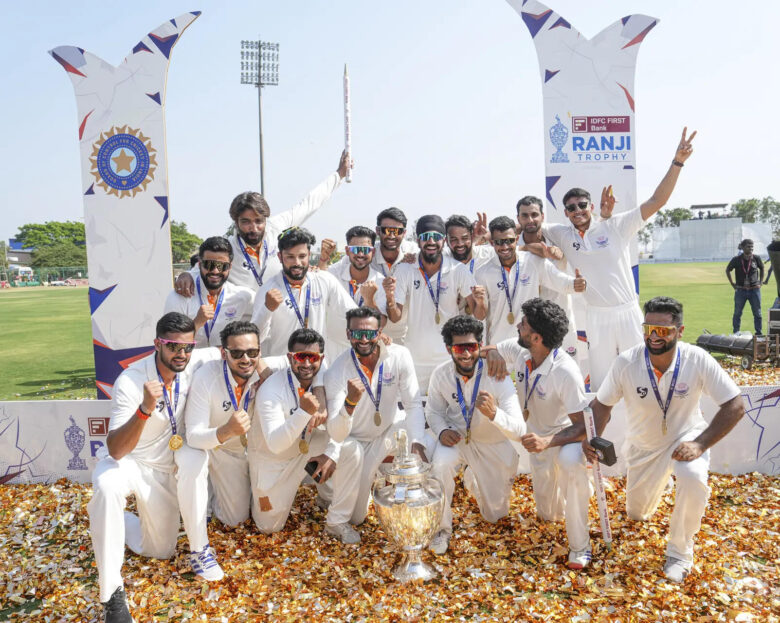
Jammu and Kashmir Secure Historic Maiden Ranji Trophy Title
Jammu and Kashmir (J&K) has claimed its first-ever Ranji Trophy title, marking a seismic shift in the Indian domestic cricket hierarchy. Led by 41-year-old captain Paras Dogra, the team overcame decades of infrastructural challenges and weather constraints to defeat a top-tier domestic side in the final. The victory is headlined by the lethal bowling performance of Auqib Nabi and a structural overhaul initiated by former mentors and current administrators.
Match Key Statistics and Season Highlights
The 2025-26 season proved to be the turning point for J&K cricket, driven by standout individual performances and collective discipline. Below are the key figures from their championship campaign.
| Category | Details |
|---|---|
| Champion | Jammu and Kashmir |
| Captain | Paras Dogra |
| Top Wicket Taker | Auqib Nabi (60 wickets) |
| Previous Season Best | Quarter-finals (2024-25) |
| Key Mentors (Past & Present) | Irfan Pathan, Bishan Singh Bedi |
The Rise of Auqib Nabi: From Baramulla to the IPL
The spearhead of this victory was pacer Auqib Nabi, whose performance has drawn national attention. Hailing from Baramulla, Nabi concluded the 2025-26 Ranji Trophy season with 60 wickets. This follows a successful 2024-25 campaign where he secured 44 wickets in eight matches, bringing his two-season tally to 104 scalps.
Nabi’s domestic dominance translated into financial success at the auction table. The Delhi Capitals acquired the pacer for Rs 8.40 crore for the upcoming Indian Premier League (IPL) season. Despite the commercial success, Nabi remains focused on grassroots development.
“I am one step closer,” Nabi stated regarding his goal to establish a cricket academy in Baramulla. “There is absolutely nothing here. When I started playing, I had to go to Bengaluru for training. I want to find and train more Auqib Nabis from Baramulla.”
Strategic Overhaul: The Role of Administration and Mentorship
The victory is the result of long-term planning involving the Board of Control for Cricket in India (BCCI) and the Jammu and Kashmir Cricket Association (JKCA). A three-member sub-committee led by Brigadier Anil Gupta and Mithun Manhas enforced strict professionalism, moving the team away from a previous “star culture.”
Historical contributions paved the way for the current squad’s mindset:
- Bishan Singh Bedi: The former India captain, appointed coach in 2011, is credited with instilling a competitive spirit in players like Parvez Rasool, the state’s first international cricketer.
- Irfan Pathan: Serving as a player-cum-mentor, Pathan scouted current stars, including Auqib Nabi, during trials in 2018-19. His recommendation to the JKCA to invest in Nabi proved critical.
Abid Mushtaq, a left-arm spinner for the victorious side, noted, “Irfan instilled the belief that we can beat the top domestic sides. Our players can play in the IPL and for India.”
Redemption for the “Other Nabi”
The win served as emotional redemption for Abid Nabi, a former fast bowler often cited as J&K’s first major cricket prospect. Spotted by Dennis Lillee at the MRF Pace Foundation in 2000, Abid Nabi’s career was hindered by administrative hurdles and his association with the unsanctioned Indian Cricket League.
Reflecting on the victory, Abid Nabi highlighted the infrastructural challenges the current generation overcame. “The infrastructure is still the same. You cannot have cricket in the valley after October because of the weather. It took us more than two decades, but J&K has finally arrived,” he said.
Technology and Fair Play
Veteran player Samiullah Beigh emphasized the role of technology in leveling the playing field. Beigh, who played in the team’s 2013-14 quarter-final loss to Punjab, cited past officiating errors that cost them crucial matches.
“I told my friends we are going to win because there will be DRS (Decision Review System),” Beigh explained. “In crunch moments, bigger players do put pressure on umpires. But when there is DRS to correct things, everything changes.”
This championship validates the potential of cricket in the region, proving that with professional administration and fair playing conditions, Jammu and Kashmir can compete at the highest level of Indian domestic cricket.