
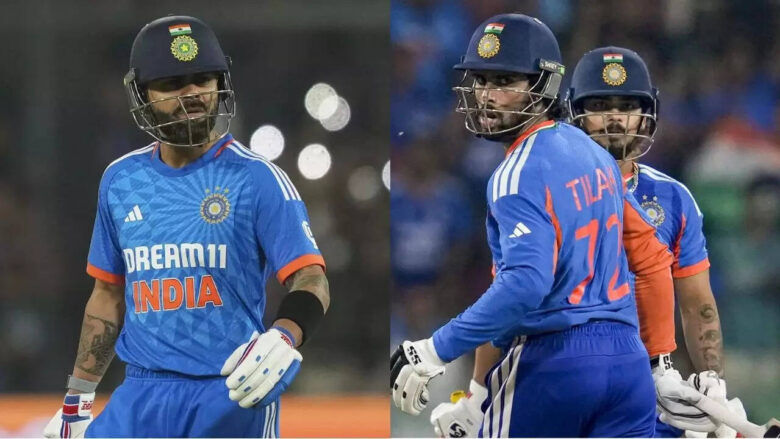
Kaif Urges Tilak Varma to Adopt Kohli’s ‘Chase Master’ Blueprint for T20 World Cup Success
NEW DELHI – Former India cricketer and fielding specialist Mohammed Kaif has called on young batter Tilak Varma to disregard external criticism regarding his strike rate and focus on solidifying his position as the team’s batting anchor. As preparations continue for the T20 World Cup 2026, Kaif suggests Varma should emulate the role perfected by Virat Kohli rather than succumbing to the pressure of aggressive stroke-play.
Defining the Anchor Role in India’s Lineup
Following a string of performances where Varma scored 107 runs across five matches, scrutiny over his scoring pace has increased. During a recent match against South Africa, Varma was dismissed attempting an aggressive shot early in his innings—a move Kaif attributes to unnecessary pressure to accelerate.
Speaking on his YouTube channel, Kaif emphasized that Varma’s natural game is suited for stability rather than explosive power hitting. He argued that with a top order populated by high-risk, high-reward batters, the team requires a player capable of taking the game deep.
“Tilak Varma has his own way of playing. He can afford to play with a slow strike rate,” Kaif stated. “However, he got out while playing a big shot. There was pressure building on him for the strike rate. As a player, you do keep track of what is being said. But it is the job of the management to ask the player to stick to his role. He should play Virat Kohli’s role.”
Strategic Balance: Aggressors vs. Anchors
Kaif highlighted the structural composition of the Indian T20 squad, pointing out that the presence of multiple power hitters affords Varma the luxury of time. According to Kaif, attempting to match the strike rates of teammates like Abhishek Sharma or Suryakumar Yadav disrupts Varma’s rhythm and leads to premature dismissals.
The following table illustrates the tactical roles Kaif suggests for the current batter pool:
| Player Role | Key Batters Identified by Kaif | Primary Responsibility |
|---|---|---|
| Aggressors | Abhishek Sharma, Ishan Kishan, Suryakumar Yadav, Rinku Singh | High strike rate, boundary clearing, risk-taking |
| All-Rounders | Hardik Pandya, Washington Sundar | Finishing, acceleration in death overs |
| The Anchor | Tilak Varma | Innings stability, playing till the 20th over, minimizing risk |
The ‘Chase Master’ Methodology
Kaif’s analysis centers on the concept of the “Chase Master,” a title synonymous with Virat Kohli during his tenure as India’s primary number three batter. Kaif advised Varma that stepping out to manufacture shots contradicts the requirements of an anchor, whose primary job is to ensure the team plays the full 20 overs.
“To become a chase master, you will have to first bat till the 20th over. Tilak Varma got out early, trying to hit. What is your role? There should be at least one player who takes the game deep,” Kaif explained. “You’ll never be able to play if you listen to what others are saying.”
Varma’s ability to absorb pressure will be critical in upcoming fixtures as the BCCI selection committee continues to refine the core squad for the next major ICC tournament. Kaif urges the team management to clarify these roles to prevent young players from deviating from their natural strengths due to external noise.
For more statistics on player performance and T20 records, visit ESPN Cricinfo.