
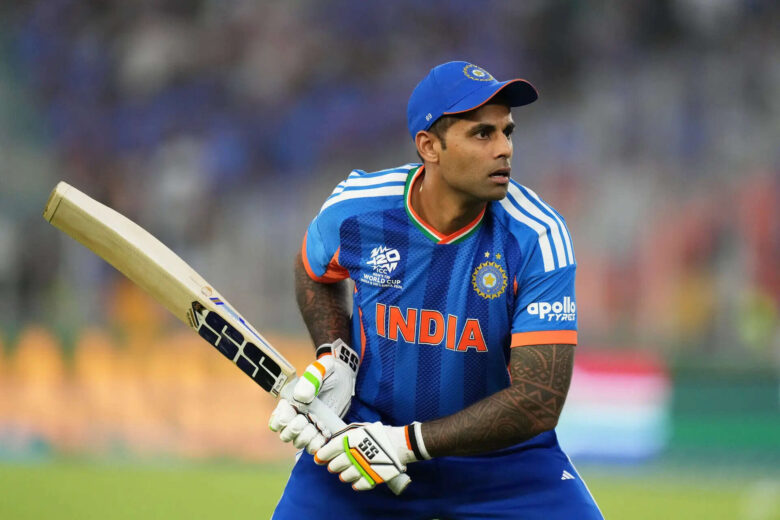
‘You do not want to expose…’: Irfan Pathan’s Tactical Advice for Suryakumar Yadav
Former India all-rounder and T20 World Cup winner Irfan Pathan has issued a strategic warning to the Indian T20 side, urging the management to prioritize match results over complex Net Run Rate (NRR) calculations. Speaking on JioStar’s Follow the Blues, Pathan also advocated for a significant shift in the batting order, suggesting captain Suryakumar Yadav should promote himself to number three to counter the team’s over-reliance on left-handed batters.
Breaking the Left-Handed Monotony
India’s current T20 setup has seen a heavy influx of left-handed talent at the top of the order, specifically Abhishek Sharma, Ishan Kishan, and Tilak Varma. While this provides variation, Pathan argues that an excess of similar batting styles can make the team vulnerable to opposition matchups, particularly off-spinners.
Pathan believes the right-handed Suryakumar Yadav is the ideal candidate to split this sequence. By batting at number three, the skipper can disrupt the bowlers’ rhythm and prevent opposition captains from settling into a line-and-length capable of stifling the southpaws.
“I think Surya can bat at number three. From the team’s perspective, I understand the conservative approach… You do not want to expose Suryakumar Yadav at number three when he is so effective in the middle overs, striking at 160. If something goes wrong with the new ball, just one good delivery can get him out. However, they still need to consider batting Suryakumar Yadav at number three to break the monotony of having three left-handers at the top.”
Current Form: The Left-Handed Trio
The call for stability comes amidst fluctuating returns from India’s young guns. While Tilak Varma has shown promise, others have faced challenges adapting to international pressure.
| Player | Role | Tactical Observation |
|---|---|---|
| Abhishek Sharma | Opener (LHB) | Recent struggles with consistency; vulnerable to early movement and spin matchups. |
| Ishan Kishan | Wicketkeeper-Bat (LHB) | Explosive potential but historically prone to getting out in the powerplay. |
| Tilak Varma | Middle Order (LHB) | Stabilizing force, though strike-rate acceleration remains a key development area. |
The Trap of Net Run Rate Calculations
Beyond personnel changes, Pathan addressed the team’s psychological approach to tournament scenarios. With qualification mathematics often becoming a distraction, Pathan advised the “Men in Blue” to focus on securing points first before worrying about the margin of victory. Chasing an inflated NRR often leads to induced errors and batting collapses.
“I really hope that approach of playing for net run-rate does not come into play at the start of the game,” Pathan stated. “The priority should be winning the game first. So, perform well and try to win. Only then should you think about the run-rate.”
He further elaborated on the difficulty of chasing NRR targets set by powerhouses like the West Indies or South Africa in the T20 format:
- Win First Mentality: Secure the two points to stay alive in the tournament.
- Realistic Targets: Chasing a massive NRR boost often requires winning margins of 80-100 runs, which is statistically rare in T20I cricket.
- Avoid Panic: Attempting to manufacture big shots too early can lead to losing wickets in clusters.
For more detailed statistics on India’s T20I performance, visit the official ICC website or track live updates on ESPNcricinfo.