
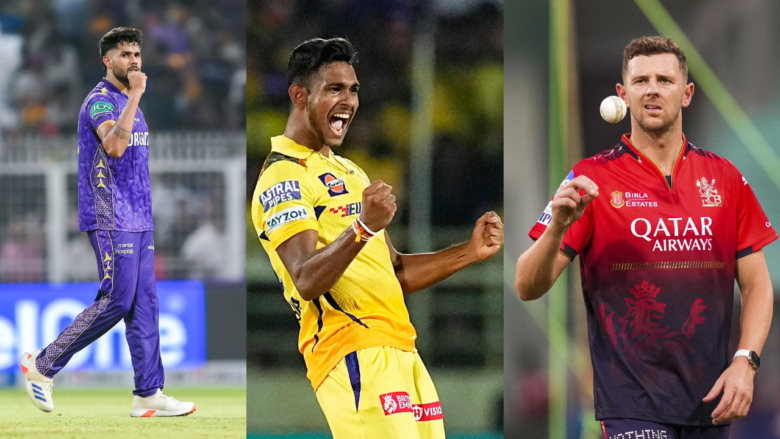
IPL Pace Concerns: KKR, SRH, and RCB Manage Fast Bowler Workloads
The rigorous schedule of the Indian Premier League (IPL) places immense physical strain on fast bowlers. Franchise coaches and support staff frequently face selection challenges as elite pacers manage workloads, recover from international duties, or rehabilitate long-term injuries. Heading into the new season, the pace resources of the Kolkata Knight Riders (KKR), Sunrisers Hyderabad (SRH), and Royal Challengers Bengaluru (RCB) remain a central focus for team management.
Kolkata Knight Riders: Defending Champions’ Pace Strategy
The Kolkata Knight Riders secured the 2024 IPL championship utilizing a highly effective pace attack. Managing the fitness of breakout star Harshit Rana is a priority for the franchise. Rana, who has previously navigated minor physical setbacks, provides essential middle-overs breakthroughs. Dispelling inaccurate earlier reports regarding the acquisition of Chennai Super Kings’ Matheesha Pathirana, KKR relies heavily on their core domestic talent to lead the attack.
To maintain pressure across the league format, KKR must rotate bowlers effectively. Indian pacers like Vaibhav Arora require careful workload management to ensure they peak during the playoffs. The franchise’s medical team continuously monitors player metrics in coordination with the Board of Control for Cricket in India (BCCI).
Sunrisers Hyderabad: Protecting Pat Cummins
Sunrisers Hyderabad transformed their tactical approach under the captaincy of Australian fast bowler Pat Cummins, reaching the IPL finals in 2024. Cummins shoulders an enormous workload, balancing his role as Australia’s Test and ODI captain with high-intensity franchise cricket.
While unfounded rumors occasionally circulate regarding captaincy changes, SRH is firmly committed to Cummins’ leadership. The primary challenge for SRH is ensuring Cummins avoids aggravating past back and knee issues. The team requires consistent backup from domestic pacers like Bhuvneshwar Kumar and T. Natarajan to reduce the dependency on their international marquee player.
Royal Challengers Bengaluru: Rebuilding the Pace Attack
Pace bowling remains a historical vulnerability for Royal Challengers Bengaluru. The franchise frequently reshuffles its bowling unit to find adequate support for Mohammed Siraj. Past iterations relied heavily on international stars like Josh Hazlewood, whose precise line and length provided stability before his departure from the squad.
RCB’s management is currently focused on developing left-arm seamer Yash Dayal alongside Siraj. Accurate data tracking and rotational strategies are necessary, as RCB historically struggles to defend totals at the high-scoring M. Chinnaswamy Stadium.
Pace Bowler Impact and Workload Summary
To understand the current dynamics of franchise pace bowling, review the statistical impact and workload profiles of key bowlers:
| Player | Franchise | Role | Workload Factor |
|---|---|---|---|
| Harshit Rana | KKR | Right-arm fast | Domestic rotation required |
| Pat Cummins | SRH | Captain / Right-arm fast | High international volume |
| Mohammed Siraj | RCB | Right-arm fast | All-format Indian player |
| Matheesha Pathirana | CSK | Right-arm fast (Sling) | Injury-prone, requires monitoring |
Key Takeaways for IPL Franchises
- Workload Management: Teams must synchronize their medical data with national boards to prevent breakdown of key assets.
- Domestic Depth: Franchises relying entirely on overseas pacers struggle when international duty or injuries occur.
- Tactical Rotation: Using Impact Players allows teams to rest fast bowlers during fielding innings, extending their tournament endurance.
Success in modern T20 cricket demands a resilient pace battery. Historical data published by ESPNcricinfo indicates that teams building secondary layers of fast bowling talent are statistically more likely to secure playoff positions.