
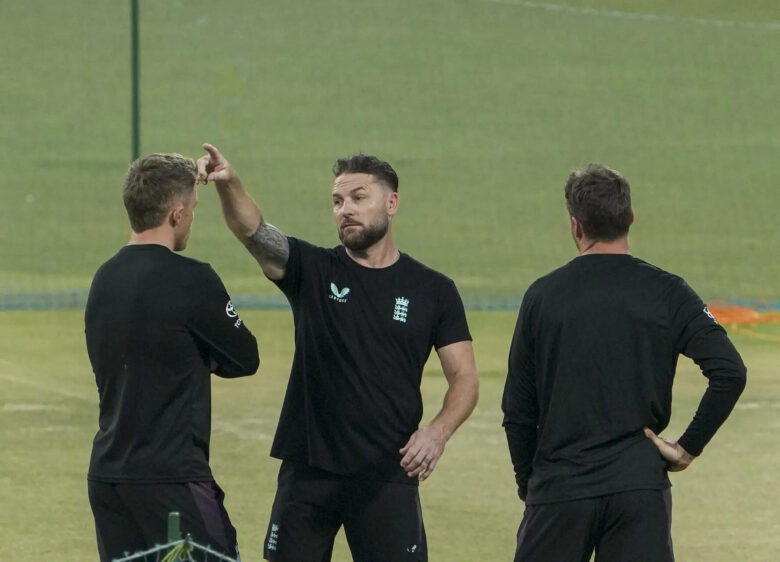
McCullum Rejects ‘Casual’ Label Following England’s World Cup Departure
England head coach Brendon McCullum has vigorously defended his management style following the team’s exit from the ICC Men’s T20 World Cup 2026. Despite a narrow seven-run defeat to India in the semi-final at Wankhede Stadium, McCullum insisted that his “informal” approach should not be mistaken for a lack of professionalism.
The loss in Mumbai concluded a volatile campaign for the defending champions, marked by a flawless Super 8 run but inconsistent group-stage performances. Critics have pointed to the team’s relaxed off-field culture as a potential liability, a suggestion McCullum flatly denied.
Clarifying the High-Performance Environment
Addressing concerns regarding the team’s preparation standards, McCullum distinguished between a relaxed atmosphere and a lack of work ethic. He argued that the current setup is designed to maximize on-field freedom rather than minimize off-field discipline.
“It’s never been about that. That’s a perception that is not necessarily reality,” McCullum told the BBC. “I think there’s a perception that we run a casual operation. It couldn’t be further from the truth. We run an informal operation, but the work is done, and the preparation is put in place.”
The coach emphasized that psychological freedom is essential for executing the aggressive tactical blueprint England utilizes in white-ball cricket.
“I make no apologies for running an informal, positive environment, but to call it a casual environment is not fair,” McCullum added. “That’s just an attitude to try to allow guys to be as free as possible to implement the skills and tactics that you’re trying to achieve.”
Semi-Final Match Statistics
The semi-final at the Wankhede Stadium was a high-scoring affair consistent with the venue’s history. While England’s batting lineup chased aggressively, they fell just short of India’s total.
| Match Detail | Statistic |
|---|---|
| Tournament Stage | ICC Men’s T20 World Cup 2026 – Semi-Final |
| Venue | Wankhede Stadium, Mumbai |
| Opponent | India National Cricket Team |
| Result | India won by 7 runs |
| Key Context | Highest-scoring fixture of the tournament |
Backing Harry Brook’s Leadership
A significant narrative of the tournament was the leadership of Harry Brook, who captained the side in his first major global event. McCullum offered a strong endorsement of Brook’s tactical acumen and growth during the campaign.
“I’m incredibly proud of him. He’s grown immensely in the last couple of months under difficult circumstances,” McCullum stated via the England and Wales Cricket Board (ECB). “There’s a real identity to how Harry Brook’s England white-ball side is going to play. It’s hugely encouraging.”
Tournament Volatility and Future Outlook
England’s path to the semi-final was uneven. While they dominated the Super 8s, the group stages exposed vulnerabilities. The team suffered a defeat to the West Indies and faced unexpectedly tight contests against Scotland, Pakistan, and Italy.
This World Cup exit follows a difficult period for English cricket, including a recent 4-1 loss in The Ashes. However, the ECB has indicated no immediate plans to alter the coaching structure, with McCullum expected to lead the transition into the next cycle of ICC events.
Key Takeaways
- Coaching Stance: McCullum defends “informal” culture as necessary for player freedom.
- Captaincy: Harry Brook retains full backing of management after his first tournament as skipper.
- Performance: England failed to chase down India’s total in Mumbai, losing by 7 runs.
- Job Security: McCullum remains head coach despite the semi-final exit and recent Ashes defeat.
For official tournament statistics and fixtures, visit the International Cricket Council (ICC) website.