
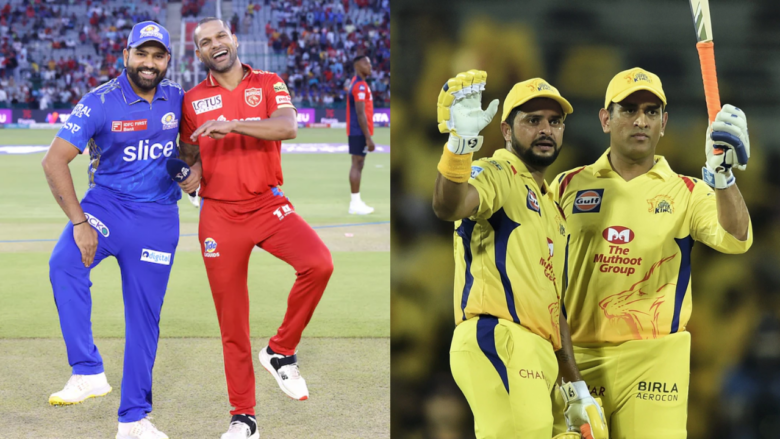
Greatest IPL Batters Who Never Claimed the Orange Cap
As the 19th edition of the Indian Premier League (IPL) approaches its scheduled start on March 28, historical batting statistics highlight an interesting anomaly. In a tournament format structurally designed to favor run-scoring, the Orange Cap is awarded to the highest individual run-scorer of a given season. However, several elite batters who dominate the all-time run charts have never secured this specific award.
All-Time Run Scorers Without an Orange Cap
The data below details the career statistics of top IPL batters who have consistently accumulated runs without finishing a season as the top scorer, utilizing verified data from official IPL records and the BCCI.
| Player | Matches | Total Runs | Best Season (Runs) |
|---|---|---|---|
| Shikhar Dhawan | 222 | 6,769 | 2020 (618) |
| Rohit Sharma | 257 | 6,628 | 2013 (538) |
| Suresh Raina | 205 | 5,528 | 2013 (548) |
| MS Dhoni | 264 | 5,243 | 2013 (461) |
| AB de Villiers | 184 | 5,162 | 2016 (687) |
| Ajinkya Rahane | 185 | 4,642 | 2012 (560) |
1. Shikhar Dhawan
Sitting second on the all-time run charts behind Virat Kohli, Shikhar Dhawan has amassed 6,769 runs across 222 matches. Representing franchises including Sunrisers Hyderabad, Delhi Capitals, and Punjab Kings, Dhawan came exceptionally close to the Orange Cap during the 2020 and 2021 seasons. In 2020, he scored 618 runs, including consecutive centuries, but finished second overall.
2. Rohit Sharma
Rohit Sharma holds five tournament championships as captain of the Mumbai Indians. He ranks third among the top run-scorers in IPL history, recording 6,628 runs in 257 matches. According to ESPNcricinfo statistics, Sharma’s highest seasonal aggregate was recorded in 2013, scoring 538 runs. Despite career longevity and high run volume, he has never led the seasonal run charts.
3. Suresh Raina
Operating as the primary anchor for the Chennai Super Kings, Suresh Raina accumulated 5,528 runs in 205 matches, maintaining a career strike rate above 136. His best statistical output occurred in 2013 with 548 runs. While he recorded 400-plus runs in nine out of his first ten seasons, a single-season peak high enough to claim the Orange Cap eluded him.
4. AB de Villiers
AB de Villiers completed his IPL career with 5,162 runs in 184 matches. Batting primarily in the middle order for Royal Challengers Bangalore inherently limited the total deliveries he faced compared to conventional openers. His highest-scoring campaign was in 2016, generating 687 runs to finish third in the overall standings.
5. Ajinkya Rahane
Ajinkya Rahane has provided dependable top-order production, scoring 4,642 runs in 185 matches. His peak aggregate was recorded in 2012 for the Rajasthan Royals, where he accumulated 560 runs. Operating with classical technique, he consistently generated volume without ever finishing a season as the outright leader.
Honorable Mention: MS Dhoni
MS Dhoni has compiled 5,243 runs in 264 matches, primarily operating as a lower-order finisher. This specialized position restricts the delivery volume necessary to build massive seasonal totals. His peak run-scoring years, specifically 2013 (461 runs) and 2018 (455 runs), reflect efficiency and match impact rather than aggregate volume.
Why Did These Legends Miss the Award?
Several variables explain why these elite run-scorers missed the season-ending accolade:
- Batting Position: Middle-order players faced significantly fewer deliveries over a 14-match season than top-order openers.
- Tournament Consistency: Batters like Suresh Raina produced reliable 400-plus run seasons regularly, rather than volatile 700-plus run outlier campaigns.
- Internal Team Competition: Highly successful franchises distribute run-scoring responsibilities across the top order, reducing individual statistical dominance.
The historical absence of an Orange Cap does not negate the value these players provided to their franchises. Their sustained run production across multiple editions directly correlated with team success, indicating that aggregate seasonal leadership is just one metric of offensive value.