
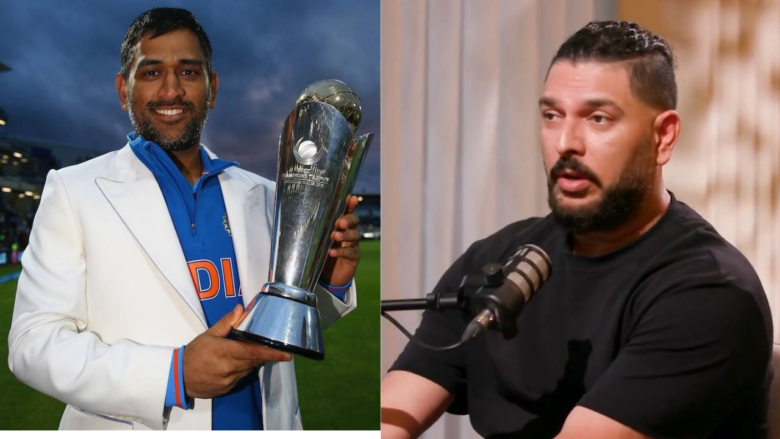
“From Nowhere”: Yuvraj Singh Recalls MS Dhoni’s 2007 Captaincy Appointment
Former Indian all-rounder Yuvraj Singh has opened up about the unpredictable nature of cricket leadership, recalling the surprising decision to name MS Dhoni as the national team captain in 2007. Speaking on the Sports Tak podcast, Yuvraj detailed how sudden captaincy changes impact player morale, drawing parallels between his own experiences and modern franchise cricket dynamics.
The 2007 Leadership Shift
Prior to the inaugural 2007 T20 World Cup in South Africa, India possessed several senior players with valid claims to the captaincy. Following Rahul Dravid’s resignation, established figures like Virender Sehwag and Harbhajan Singh were regular members of the squad. Yuvraj Singh was serving as the vice-captain of the One-Day International (ODI) team and was widely considered the heir apparent.
“When I was in the Indian team, Harbhajan Singh and Virender Sehwag were seniors. I was vice-captain, but from nowhere MS Dhoni comes and becomes captain,” Yuvraj stated.
The Board of Control for Cricket in India (BCCI) ultimately handed the reins to the 26-year-old Dhoni. The unexpected decision reshaped the future of Indian cricket, as Dhoni immediately led the young squad to victory at the International Cricket Council T20 World Cup.
Franchise Loyalty and Player Disappointment
Applying this history to current Indian Premier League scenarios, Yuvraj discussed the psychological toll on players who dedicate years to a single team but get passed over for leadership roles. He constructed a hypothetical scenario involving young talents like Abhishek Sharma and veteran franchise players like Ishan Kishan to illustrate the complex emotions behind the scenes.
According to Yuvraj, the primary factors that cause friction during franchise captaincy changes include:
- Years of loyalty to a single franchise without leadership recognition.
- Newer players arriving and immediately receiving captaincy roles.
- The demotion or stagnation to vice-captaincy despite consistent on-field performances.
Yuvraj explained that a player who gives seven years to a franchise expects to be rewarded with the captaincy. “Whatever the reasons, franchise cricket will not determine if you will captain India. But from a player’s perspective, it is disappointing if someone has done so much for you over so many years,” he noted.
Historical Context: India’s 2007 T20 World Cup Core
To understand the magnitude of the 2007 decision, it is necessary to look at the hierarchy of the Indian squad at that time:
| Player | Role in 2007 T20 World Cup | Prior Status |
|---|---|---|
| MS Dhoni | Captain / Wicketkeeper | Regular squad member |
| Yuvraj Singh | Vice-Captain / Middle-order Batter | ODI Vice-Captain |
| Virender Sehwag | Opening Batter | Senior core member |
| Harbhajan Singh | Lead Spinner | Senior core member |
Long-Term Results of the 2007 Decision
Despite missing out on the captaincy, Yuvraj remained an integral part of the Indian leadership group under Dhoni. He famously struck six sixes in an over against England’s Stuart Broad during the 2007 tournament, a performance recorded permanently in the ESPNcricinfo archives. Yuvraj subsequently won the Player of the Tournament award during India’s successful 2011 ODI World Cup campaign on home soil.
The transition from established seniors to a younger captain in 2007 remains one of the most studied administrative decisions in cricket history. Yuvraj’s recent comments confirm that while professionals accept these sporting decisions, the initial shock and disappointment are standard reactions in both international and franchise dressing rooms.