
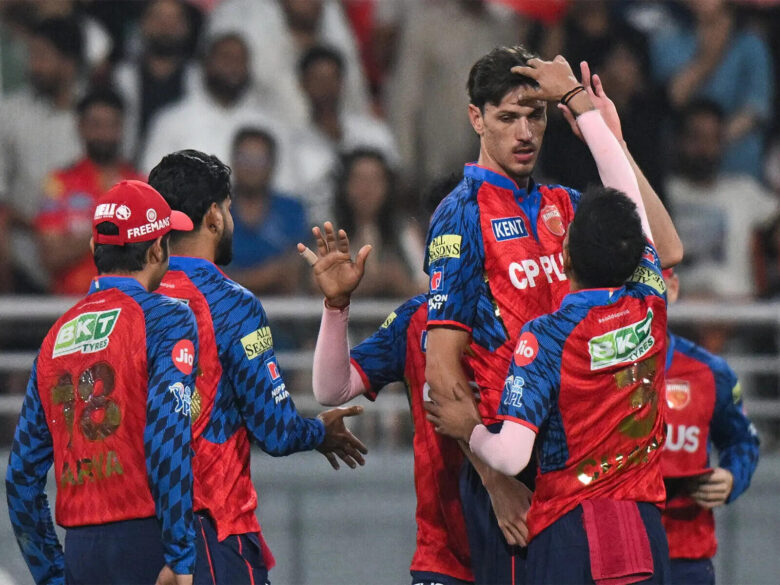
From Contenders to Calculators: Punjab Kings’ Playoff Hopes Hang by a Thread
DHARAMSHALA — Two weeks ago, the Punjab Kings (PBKS) looked like the team nobody wanted to face in the Indian Premier League. With six wins and a washout from their opening matches, they sat comfortably near the top of the points table. They boasted a healthy net run rate and a swagger that suggested postseason qualification was merely a formality. Fast forward to today, and four consecutive defeats have dragged them down the standings, leaving them with 13 points from 11 games and scrambling for a Playoff berth.
Related cricket updates: Delhi Capitals IPL 2025 Playoff Hopes Fade After Loss to Mumbai Indians, Punjab Kings Playoff Hopes Drop After MI Defeat IPL 2026 and IPL 2025 Points Table: Punjab Kings Beat CSK, End Playoff Hopes at Chepauk.
IPL 2026 data links: IPL 2026 data hub, IPL 2026 points table, IPL 2026 Orange Cap, IPL 2026 Purple Cap, Ishan Kishan, Sanju Samson, Ajinkya Rahane, Nitish Kumar Reddy.
The Anatomy of a Four-Match Slump
The slide has been sudden and alarming for the franchise. The downturn began with a failure to defend 222 against the Rajasthan Royals. This was immediately followed by a careless batting display against the Gujarat Titans, where a modest total of 163 was comfortably chased down. The bowling unit then crumbled under the Sunrisers Hyderabad’s massive score of 235. The latest heartbreak occurred at the HPCA Stadium in Dharamshala, where PBKS suffered a three-wicket loss to the Delhi Capitals despite posting 210 on a lively, seaming pitch.
What initially looked like a procession to Qualifier 1 now demands absolute perfection in their final three games. PBKS must secure victories against the Mumbai Indians and Royal Challengers Bengaluru at home, followed by a high-stakes away fixture against the Lucknow Super Giants.
| Opponent | Result | Key Match Statistic |
|---|---|---|
| Rajasthan Royals | Loss | Failed to defend 222 |
| Gujarat Titans | Loss | Scored only 163 (chased easily) |
| Sunrisers Hyderabad | Loss | Conceded 235 runs |
| Delhi Capitals | Loss (3 Wickets) | Failed to defend 210 in Dharamshala |
Fielding Woes and Tactical Missteps
Acting captain Sam Curran was candid about the team’s shortcomings following the defeat to Delhi. Correcting early internal communication errors, the leadership group has identified clear areas of regression. “I won’t beat around the bush,” Curran stated. “Fielding and bowling have once again let us down. A total of 210 was easily 30 runs above par on this wicket, considering the variable bounce and seam movement.”
The statistics validate Curran’s frustration. According to ESPNcricinfo match data, fielding has become a recurring nightmare for Punjab. The team has dropped 19 catches this season—the highest of any franchise—including two critical drops against Delhi. Across 11 games, their catch success rate sits at a dismal 71.43 percent, tying them for the worst fielding record in the tournament.
PBKS spin-bowling coach Sunil Joshi acknowledged the defensive crisis during the post-match press conference. “We are dropping catches at crucial times. We will definitely look into those areas and see how we can turn it around,” Joshi explained. “Making wholesale changes to the side won’t be the answer. Everyone has performed well at some stage in the tournament. We will get better.”
Bowling Execution Under Pressure
The bowling attack has also lost its rhythm. During the Dharamshala fixture, lead leg-spinner Rahul Chahar was held back entirely—a rare tactical move in modern T20 cricket. Joshi defended the decision as a strict match-up strategy dictated by the seaming conditions.
Curran expanded on the bowling strategy: “The way the ball was seaming, if we had executed our lines and lengths in a precise manner, we could have extracted all the necessary wickets with our pace attack. Unfortunately, we lacked that execution.”
Keys to a Potential Turnaround
Despite the steep climb ahead, the PBKS coaching staff refuses to hit the panic button. To qualify for the Playoffs, the team must execute on three primary fronts:
- Improve Catch Efficiency: The 71.43 percent catch success rate must drastically improve to support the pace attack.
- Capitalize on Home Conditions: Dharamshala’s altitude and pitch characteristics favor aggressive stroke play and early seam movement, which PBKS must leverage against MI and RCB.
- Stabilize the Middle Overs: The spin department needs to be reintegrated effectively to control the run rate between overs 7 and 15.
“We started really well, and yes, we’ve lost our last four games, but we are still in the hunt to qualify,” Joshi added, reflecting the mandate of the BCCI and franchise owners to maintain competitive intensity. “It is a tournament of fluctuations. We have to stay focused on the path ahead, take the learnings from these losses, and apply them to the next challenge.”