
Beyond the $256K Payout: How Nepal Cricket Plans to Bridge the Gap with IPL Exposure and BCCI Support
The International Cricket Council (ICC) recently confirmed a $256,154 distribution to the Cricket Association of Nepal (CAN). This financial injection, sourced from the T20 World Cup revenue distribution model, provides necessary capital for a nation aiming to transition from an Associate competitor to a permanent fixture on the global stage. For Nepal, this funding exceeds the earnings of established Associate nations like Namibia, Canada, and Oman.
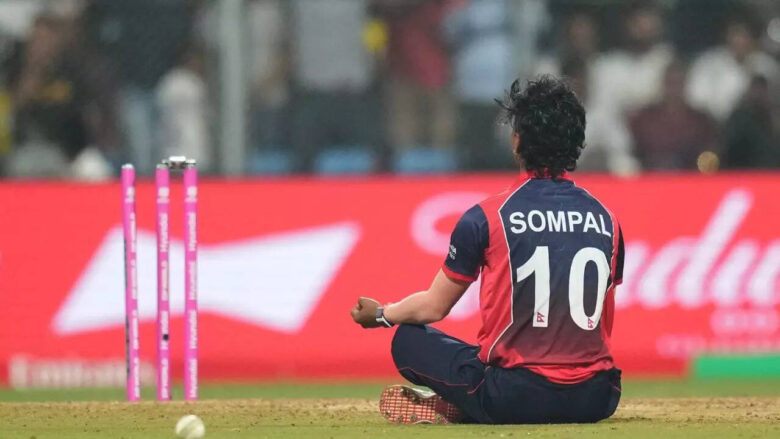
While the capital provides operational relief, the primary obstacle for Nepal remains on the pitch. During the 2024 ICC Men’s T20 World Cup, Nepal demonstrated highly competitive phases, notably falling short by just one run in a historic near-upset against South Africa. Converting these close contests into consistent victories requires more than raw talent.
The Missing Ingredient: High-Pressure Execution
Former Nepal head coach Umesh Patwal identifies role clarity and high-pressure experience as the primary variables preventing Nepal from closing out tight matches. According to Patwal, the squad lacks designated finishers accustomed to international intensity.
“Sometimes it is just about knowing who needs to take that extra effort to finish the game,” Patwal states. “They are not sure who is supposed to be the match-winner. Once they start believing Sandeep Lamichhane is the primary bowler, the batting must follow. If players like Kushal Bhurtel, Dipendra Singh Airee, or Rohit Paudel start finishing games, that gap will close. They do not have enough match-winners at the higher level yet.”
Current captain Rohit Paudel acknowledged the learning curve following their recent World Cup exit, emphasizing the value of international exposure while expressing disappointment over missing the second round.
Franchise Exposure: The IPL and Big Bash Solution
To acquire this high-level experience, Patwal advocates for integrating Nepalese players into elite franchise environments, specifically targeting the Indian Premier League (IPL) and the Big Bash League (BBL). The objective is cultural immersion rather than immediate match time.
“Playing international matches alone does not help,” Patwal argues. “You have to be in the culture. At least six of these players should be exposed to the IPL or the Big Bash. Just being with the team, observing the training methods, dietary habits, and recovery protocols provides a high return on investment.”
He notes that elite Indian players benefit heavily from localized mentorship. Nepalese players currently lack domestic veterans with global championship experience to model their routines after.
Restructuring the Domestic Pipeline
Nepal’s internal development relies on a highly tiered system culminating in the Prime Minister (PM) Cup. This structure integrates regional qualifiers with institutional backing.
| Competition Level | Structure and Selection Process |
|---|---|
| Grassroots & Sub-District | Local club tournaments filter top prospects into district-level squads. |
| Provincial Teams | District teams compete within their provinces to form the final seven provincial rosters. |
| Departmental Teams | Three government-backed teams (Army, Police, Armed Police Force) provide professional contracts and salaries. |
| Prime Minister (PM) Cup | A 10-team national tournament acting as the primary selection filter for the national training camp. |
Former captain Gyanendra Malla believes this system requires immediate expansion. The current schedule limits domestic cricket to short, 15-day tournament windows. Malla advocates for multi-day formats to build endurance and game awareness.
Leveraging BCCI Support and Geography
Financial precarity remains a barrier for players outside the top 15 to 20 centrally contracted individuals. Many district-level athletes self-fund their training. To accelerate development without massive financial outlays, Malla points to Nepal’s geographic proximity to India and the Board of Control for Cricket in India (BCCI).
“We are blessed to have four Test-nation neighbors, but we are not using that as a strength,” Malla states. “Playing regularly against India ‘A’ or ‘B’ sides, or Ranji Trophy teams, would help our boys learn the thinking pattern of top-tier players. We need assistance from the BCCI to grow and eventually become a Test nation.”
Actionable Steps for Nepal’s Cricket Development
- Extend the Domestic Season: Transition from short-window tournaments to a sustained, multi-month domestic calendar featuring multi-day red-ball cricket.
- Secure Franchise Placements: Lobby for Nepalese representation in global T20 leagues as development players to absorb high-performance cultures.
- Establish Bilateral ‘A’ Tours: Partner with the ICC and BCCI to schedule consistent fixtures against regional emerging squads.
Nepal’s global identity is shifting rapidly. With top-tier fielding statistics and passionate fan support, the foundation exists. Translating that foundation into consistent World Cup victories now depends on expanding their domestic season, securing franchise cricket exposure, and formalizing a strategic partnership with Indian cricket authorities.